Quick answer: More advisories are not the whole problem. Vulnerability triage slows down when teams cannot quickly connect a new finding to real exposure, service ownership, recent changes, and the safest next action.
TL;DR
- GitHub says advisory volume is hitting record levels, which matches what many teams already feel in day-to-day triage.
- CISA's KEV catalog keeps growing, so the pressure to prioritize real risk is not going away.
- The hard part is no longer seeing a vulnerability. It is deciding what matters first in your own environment.
- Teams that move fastest are usually the ones that can assemble context quickly, not the ones with the longest findings list.
What problem are we solving?
Security and platform teams are not short on vulnerability signals anymore.
They have scanners, advisories, SBOMs, ticket queues, and plenty of dashboards. GitHub's June 29 post makes the trend official: the Advisory Database is processing more vulnerability reports than ever before.
That sounds like progress, and in some ways it is. More coverage is better than blind spots.
But once volume rises past a certain point, the operational bottleneck shifts.
Teams stop asking, "Did we detect it?" and start asking:
- Is this actually exposed in production?
- Which service or dependency path makes it matter here?
- Is there active exploitation pressure or just theoretical risk?
- Who owns the affected system?
- What changed recently that could make this more urgent?
- What can we safely patch now, and what needs a more careful response path?
That is not a scanning problem. It is a context problem.
Why this matters right now
There are two signals worth taking seriously together.
First, GitHub says vulnerability intake is surging. That means more teams will be processing more advisories, more dependency updates, and more triage decisions in less time.
Second, CISA's Known Exploited Vulnerabilities catalog continues to grow, which is a practical reminder that some issues really do deserve immediate attention. Not every finding is urgent, but some absolutely are.
That combination is what makes triage harder.
When volume climbs, teams become more dependent on quality prioritization. And when exploitation pressure remains real, getting prioritization wrong has consequences.
GitHub's June 11 work on reducing secret-scanning false positives points at the same operational truth from a different angle: security signals are only useful when responders trust them enough to act. The problem is not just quantity. It is actionability.
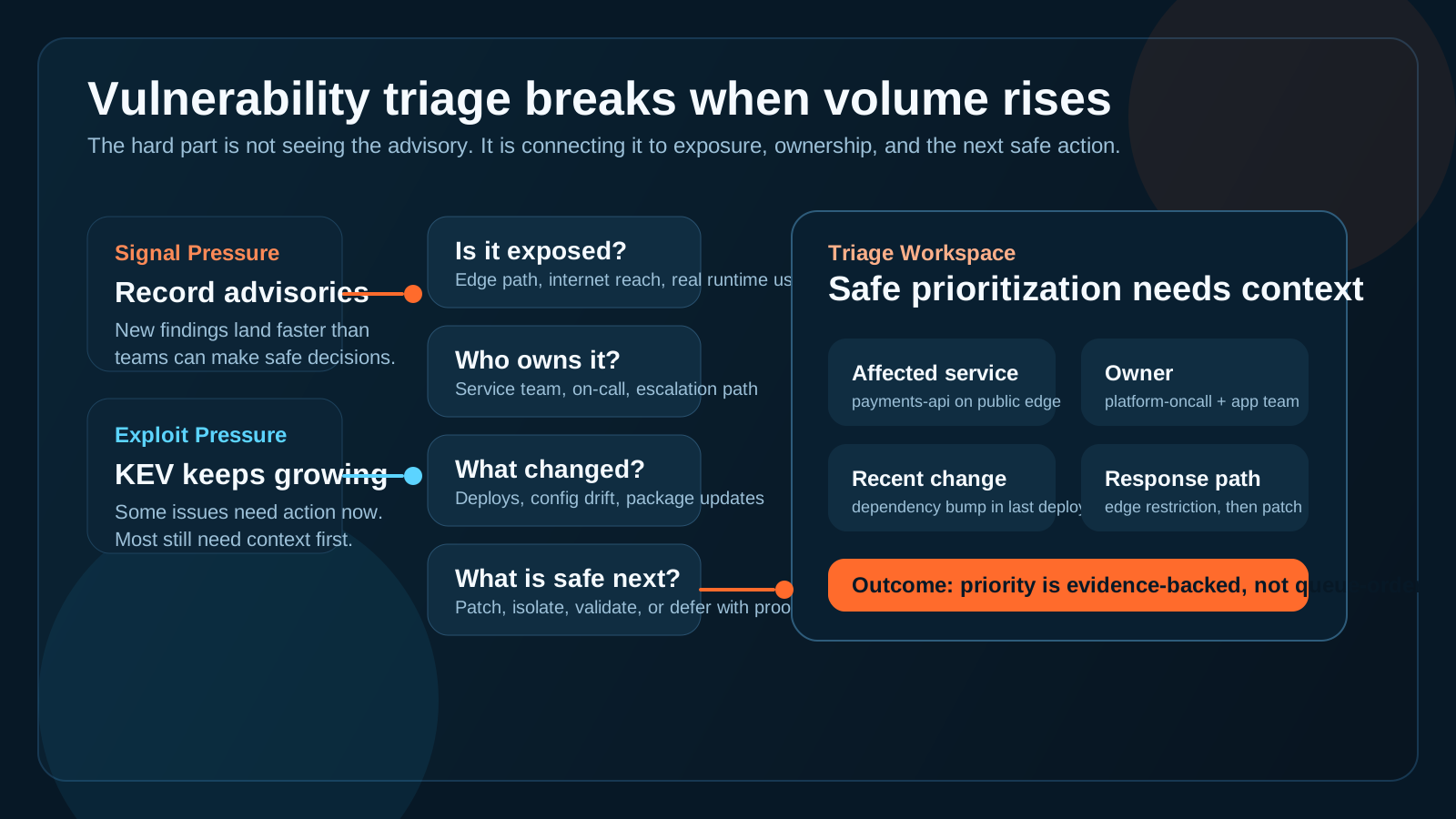
The fastest triage loops do not start with patching. They start with context that tells teams what deserves action first.
Where vulnerability triage actually gets stuck
In most environments, the delay is not reading the advisory.
The delay starts right after that, when someone has to connect the advisory to the live environment.
That often means pulling from several places at once:
- scanner findings and dependency data
- asset inventory
- internet exposure or edge paths
- service ownership
- recent deploys or config changes
- compensating controls
- incident history
- ticket queues and chat threads
All of this can exist and still be slow to use.
That is why triage often feels messy even when the tooling stack looks modern. Teams are not missing data. They are missing a fast way to assemble a usable story from it.
A practical five-question loop for better triage
When a high-noise period hits, teams do better when they answer a small set of context questions consistently.
1. Is there a real path to exposure?
The first question is not severity. It is relevance.
Is the vulnerable component actually running in a production path that matters? Is it internet reachable, reachable through a privileged internal path, or fenced off by architecture and controls?
2. Is there credible exploit pressure?
This is where KEV status, vendor guidance, and trusted threat reporting matter.
You do not need perfect certainty to prioritize. You need enough signal to distinguish "watch this" from "move now."
3. What is the blast radius in this environment?
A vulnerability affecting one low-risk internal tool is a different response from the same issue landing in a shared edge service, CI path, or admin plane.
4. Who owns the system and what changed recently?
Triage gets slower when ownership is fuzzy and recent changes are hard to reconstruct. If a vulnerable package was introduced, updated, or exposed during a recent deploy, responders need that context fast.
5. What is the safest next action?
Sometimes the answer is patch now. Sometimes it is isolate, disable exposure, add temporary controls, or validate before touching production.
Good triage is not just about ranking. It is about choosing the next safe move with enough evidence behind it.
Why AI-assisted triage still needs operational context
GitHub's January post on AI-supported vulnerability triage is a useful signal that the industry is already trying to reduce manual review effort.
That makes sense. AI can help summarize, cluster, and narrow work.
But even good AI assistance does not remove the operational questions above. It can help organize the queue. It cannot magically know your real exposure, your ownership gaps, your deployment history, or the safest change path unless that context is connected and available.
So the future is probably not "humans or AI" in triage.
It is "AI plus environment context plus human judgment."
Where OpsRabbit fits
This is the part many teams still handle with tickets, tribal knowledge, and too many browser tabs.
OpsRabbit is built for the context-assembly gap between the signal and the first safe action.
For vulnerability response, that means helping teams get to practical answers faster:
- what services are affected
- what changed recently
- who owns the environment
- what evidence matters most
- what next action is safest to validate first
That does not replace scanners or advisories. It makes them more operationally useful.
When advisory volume spikes, the teams that hold up best are the ones that compress time-to-context.
Practical takeaway
If your vulnerability backlog feels heavier every month, the answer is probably not another dashboard alone.
The better question is whether your responders can move from "new advisory" to "safe prioritized action" without a long detour through fragmented systems and guesswork.
That is the real triage test.
And as advisory volume keeps rising, it is the teams with the cleanest context path, not the loudest alerting stack, that will respond best.
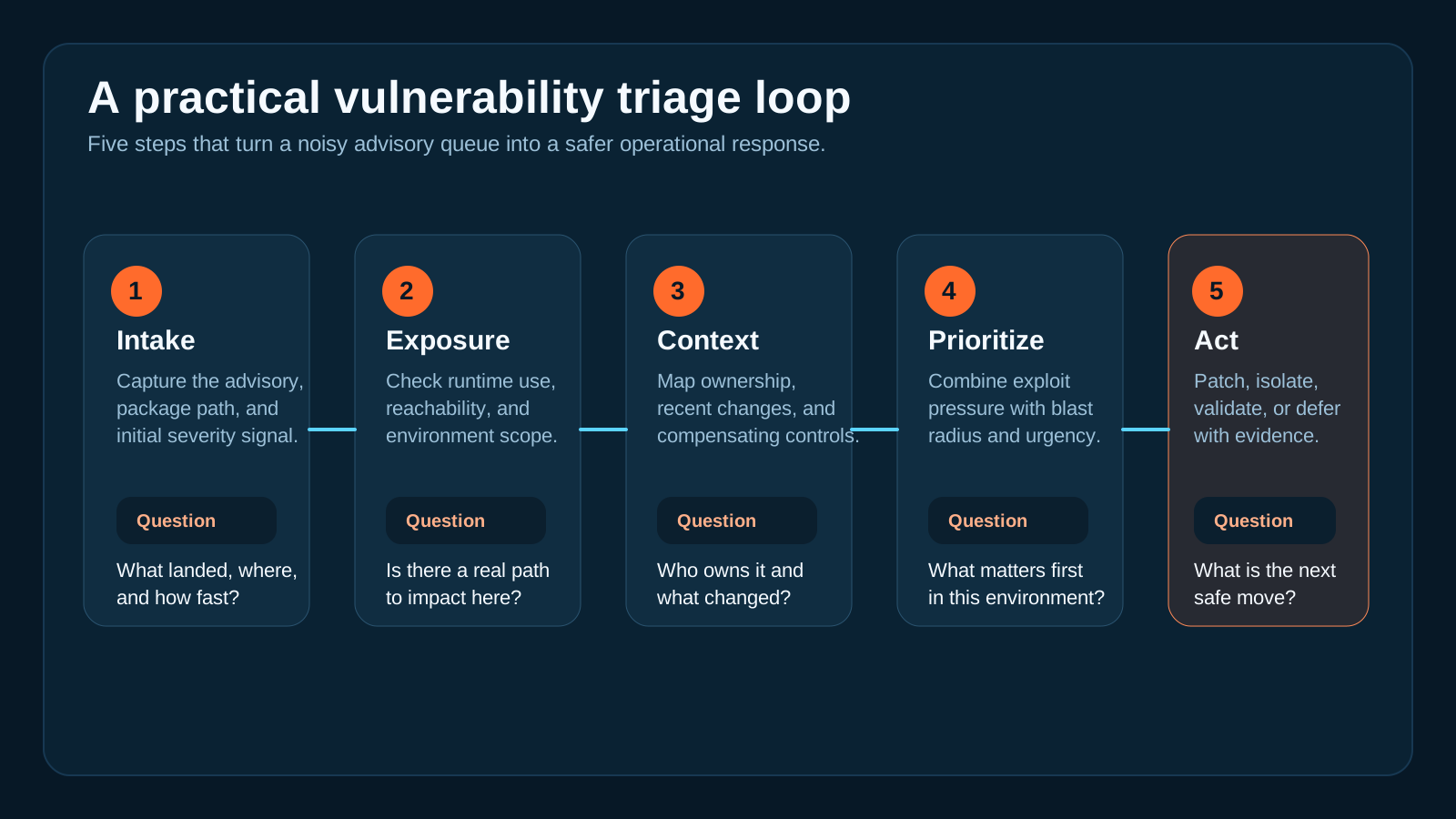
A usable triage loop connects the advisory to real systems, real owners, and a clear next step before patching starts.
CTA
If you want to cut the time between vulnerability news and a confident operational response, book a walkthrough to see how OpsRabbit reduces time-to-context for real incident and remediation workflows.
FAQs
Why is vulnerability triage slowing down now?
Because advisory and finding volume keeps rising while teams still need manual context gathering before they can decide what actually matters first.
What context matters most for vulnerability prioritization?
Exposure, exploit pressure, affected assets, service ownership, recent changes, compensating controls, and the safest next action.
Sources
- GitHub, Inside the Advisory Database and what happens when vulnerability volume breaks records - published June 29, 2026.
- GitHub, Making secret scanning more trustworthy: Reducing false positives at scale - published June 11, 2026.
- GitHub, AI-supported vulnerability triage with the GitHub Security Lab Taskflow Agent - published January 20, 2026.
- CISA, Known Exploited Vulnerabilities Catalog - accessed July 1, 2026.
Last Updated
2026-07-01
Ready to Transform Your Operations?
Ask for a demo today. Experience how OpsRabbit can reduce your MTTR by up to 90%.