Quick answer: SaaS OAuth abuse is no longer just an IAM hygiene issue. Once attackers can work through approved apps, trusted integrations, or guest-user drift, response teams need fast context about scopes, tokens, owners, and blast radius before they can choose a safe next move.
TL;DR
- Microsoft's July 13, 2026 research shows attackers abusing OAuth trust in SaaS environments through consent phishing, compromised integrations, and guest-access misconfiguration.
- The problem is not a single product bug. It is that trusted app relationships can quietly become attacker access paths.
- Traditional sign-in detections can miss the real story because the activity often looks like legitimate app behavior.
- The practical response loop starts with containment, connected-app review, blast-radius mapping, and guest-access validation.
What problem are we solving?
For years, teams treated OAuth review as a governance chore.
Approve the app. Check the scopes. Move on.
That mental model does not hold up well anymore.
Microsoft's July 13 writeup on ShinyHunters-style SaaS abuse is a useful wake-up call because it describes attackers working through relationships that many teams already trust: approved OAuth apps, downstream integrations, and public guest-access settings that drifted too far.
That changes the operational question.
The issue is no longer just, "Did a user click something bad?"
It is also:
- Which app or integration inherited access?
- Which data paths did that trust relationship expose?
- What other SaaS systems share the same blast radius?
- What can we safely revoke or isolate first without breaking everything else?
That is incident-response work, not just quarterly access review.
Why this matters right now
Microsoft says it observed campaigns between mid-2025 and mid-2026 that used overlapping tradecraft commonly associated with ShinyHunters. The attack paths included vishing users into OAuth consent, compromising trusted integrations such as Salesloft and Gainsight, and taking advantage of overly permissive guest access in Salesforce-related environments.
Klue's June 18 incident note gives the same problem a second, more operationally familiar shape. Klue said an attacker gained access through a compromised legacy credential tied to an integration service, then used OAuth tokens to access data inside connected customer environments including Salesforce.
That is the real signal.
Trusted app relationships are now part of the incident surface, and the blast radius can cross vendor boundaries faster than many teams are used to.
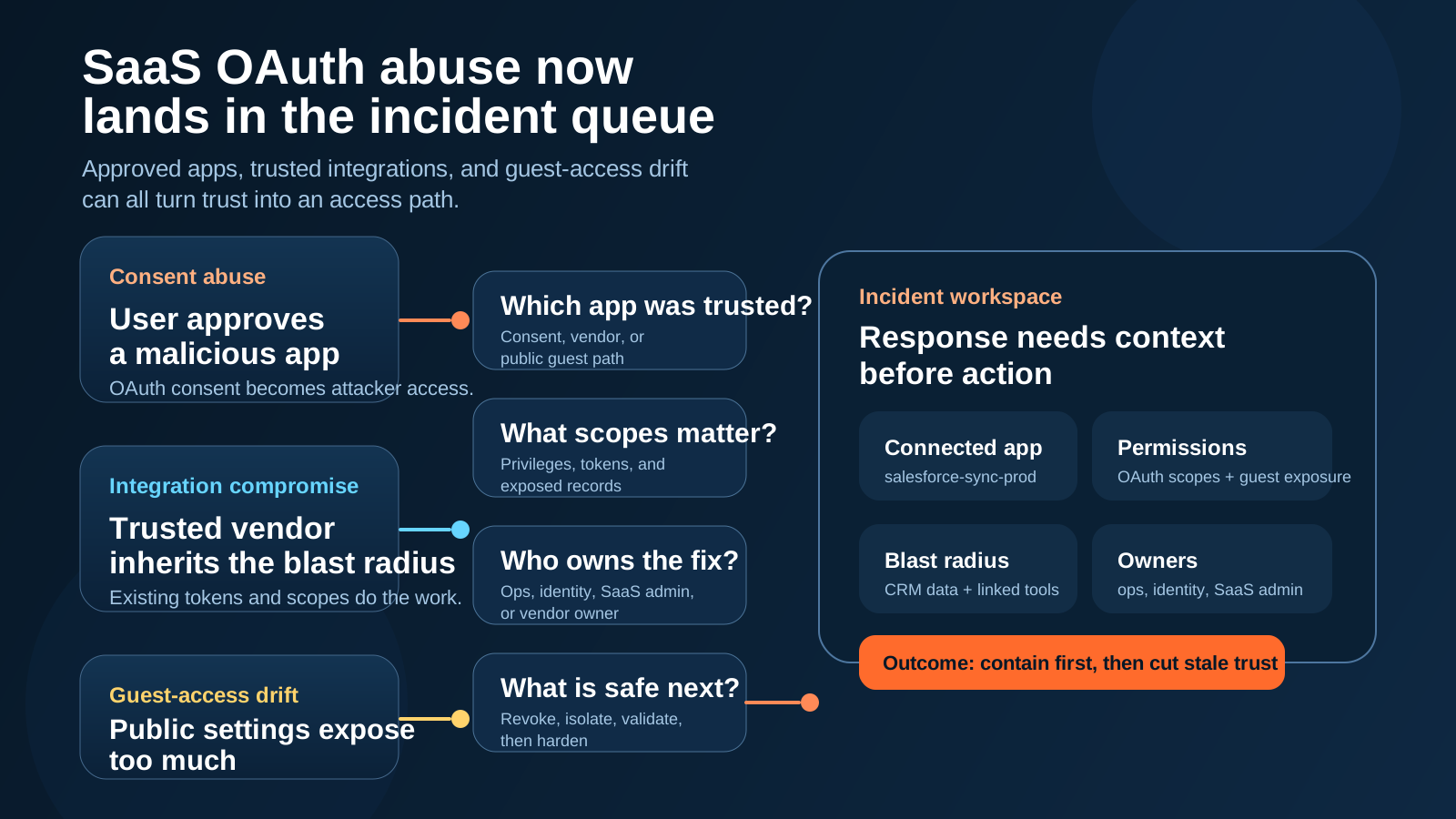
SaaS OAuth incidents rarely stay inside one screen. They move through trust relationships, inherited permissions, and connected systems.
The three intrusion paths teams should care about
Microsoft's writeup is especially useful because it breaks the problem into three practical paths.
1. Consent abuse through vishing
In the first path, attackers impersonate support or IT staff and talk users through approving a malicious connected app. That gives the attacker app-level access that rides the victim's privileges without needing classic credential replay.
2. Trusted integration compromise
The second path is uglier for operations teams because it starts downstream. If a trusted vendor integration is compromised, attackers can inherit access through existing OAuth relationships and look like normal integration traffic while they query or export data.
3. Guest-access misconfiguration
The third path is the reminder that incidents do not always begin with identity theft. Salesforce's own guidance says overly permissive guest-user settings can expose more data than intended, especially when public APIs or object permissions are wider than they should be.
The shared pattern across all three is simple: the attacker is not breaking trust so much as borrowing it.
Why auth-only detections are not enough
This is where teams lose time.
If the activity runs through an approved app, a legitimate integration, or a public guest path that the system technically allows, the first indicators can look noisy, partial, or ordinary.
Microsoft says these attacks often evaded conventional authentication detections because they operated through trusted identities and authorized apps. That does not mean defenders are blind. It means the decisive context usually lives beyond the sign-in page.
Responders need to assemble a fuller story:
- connected app identity
- granted scopes and privileges
- token usage patterns
- recent integration changes
- affected records or datasets
- guest-user exposure paths
- service owners who can validate safe containment
That is where a lot of real incident time disappears.
A five-step response loop for SaaS OAuth abuse
If a team suspects OAuth-linked SaaS abuse, I would not start with a giant postmortem board. I would start with a short control loop.
1. Contain the access path
Revoke or suspend the affected token, app, integration, or guest exposure path that looks riskiest first. The goal is not elegance. It is stopping further quiet access.
2. Inventory the connected app and its scopes
Figure out exactly what app or integration was trusted, what scopes it held, whether those scopes were still justified, and whether the app was active, stale, or over-privileged.
3. Map blast radius across connected systems
Do not stop at the first tenant. Look at downstream systems, data stores, users, and workflows that relied on the same relationship.
4. Review guest and public-access settings
Salesforce's latest guidance is blunt here: audit guest-user permissions, set external defaults to private, disable unnecessary public API access, and tighten field-level exposure.
5. Separate temporary containment from permanent hardening
Once the incident is stable, decide which apps should be removed, which scopes should be reduced, what telemetry should be enabled, and which stale integrations should not survive the cleanup.
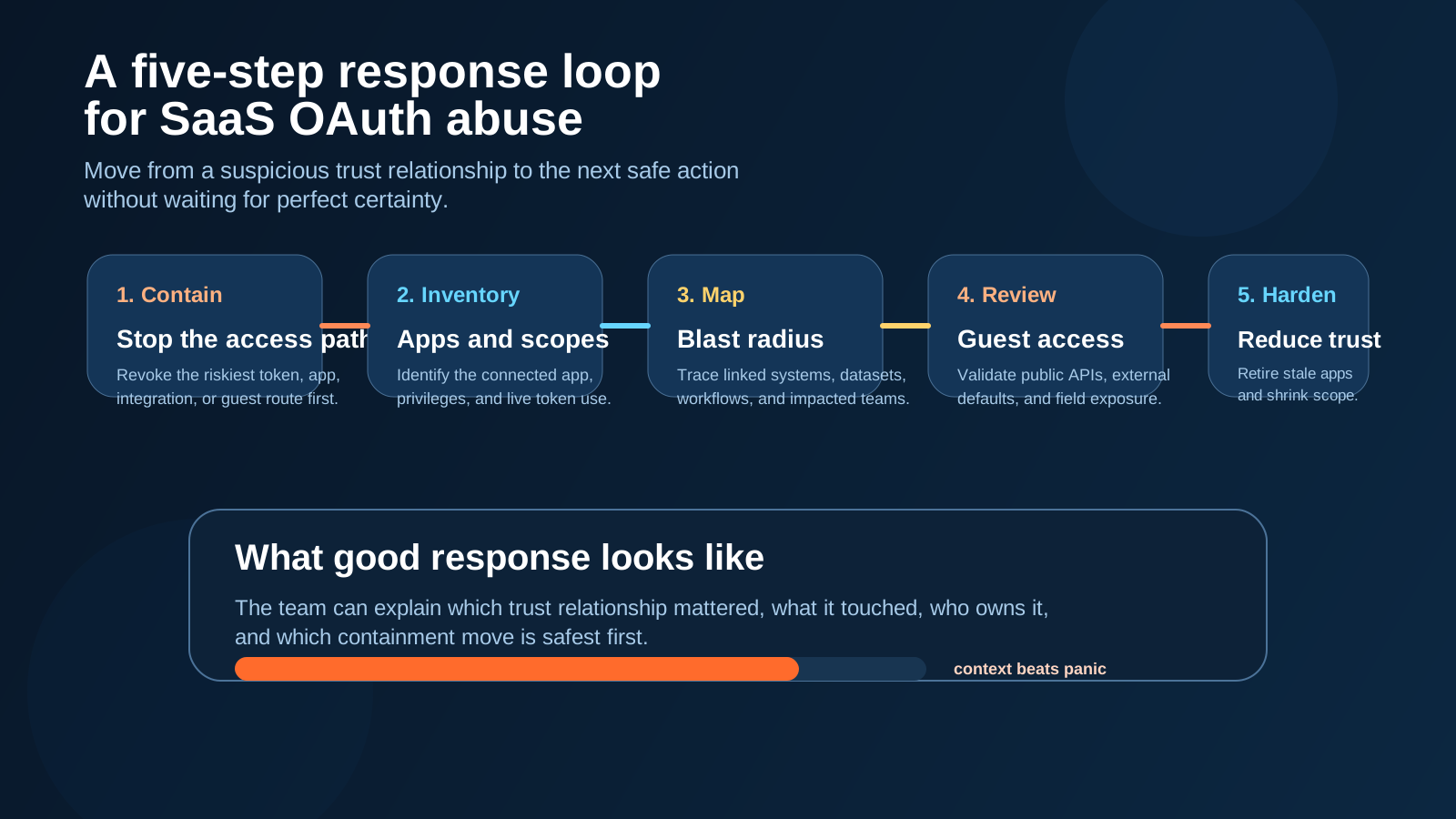
A good response loop moves from the suspicious trust relationship to the safest next action without waiting for perfect certainty.
Where OpsRabbit fits
This is the part many teams still handle with screenshots, chat threads, admin tabs, and a lot of human memory.
OpsRabbit fits in the time-to-context gap.
When a SaaS incident starts to touch app trust, OAuth scopes, guest access, and cross-system ownership, teams need faster answers to questions like:
- what changed recently
- which connected app matters most
- who owns the impacted environment
- what other systems share the blast radius
- which containment move is safest first
That does not replace your identity platform, SaaS logs, or vendor telemetry.
It makes them easier to use under incident pressure.
Final thought
I would not frame this story as "OAuth is bad."
OAuth is useful. Connected apps are useful. SaaS integrations are useful.
The operational lesson is narrower and more important: once trusted apps become a realistic attacker path, response teams need to treat app trust the same way they treat any other production dependency.
That means better visibility, faster context, and a cleaner first-response loop when something feels off.
CTA
If your team wants a faster way to move from a suspicious SaaS signal to a safe containment plan, book a walkthrough to see how OpsRabbit shortens time-to-context across identity, integration, and incident workflows.
FAQs
Why is SaaS OAuth abuse hard to detect?
Because the activity often rides approved apps, trusted integrations, or guest-access paths that can look legitimate unless teams can connect app trust, scope usage, and data access context.
What should teams review first during a SaaS OAuth incident?
Start with the access path to contain, then review connected apps and scopes, map blast radius across linked systems, validate guest or public access settings, and reduce over-privileged or unused app trust.
Sources
- Microsoft Security, Defending SaaS-based applications against ShinyHunters OAuth abuse - published July 13, 2026.
- Klue, An Update on the Recent Klue Security Incident - published June 18, 2026.
- Salesforce, Protecting Your Data: Essential Actions to Secure Experience Cloud Guest User Access - updated March 11, 2026.
Last Updated
2026-07-18
Ready to Transform Your Operations?
Ask for a demo today. Experience how OpsRabbit can reduce your MTTR by up to 90%.