Quick answer: when attackers steal secrets from build runners or trusted publishing workflows, the damage does not stay inside the pipeline. It can spread into package registries, cloud accounts, GitHub repos, and downstream systems fast, which makes it a live incident-response problem for ops teams.
TL;DR
- June 2026 gave teams a very concrete example of how CI/CD compromise can expand into credential theft, package poisoning, and cloud risk.
- The hard part is not just spotting that something went wrong. It is figuring out what the runner touched, which credentials were exposed, and what to contain first.
- GitHub is now treating CI/CD infrastructure like critical infrastructure, which is a useful sign that the response model needs to change too.
- OpsRabbit fits in the time-to-context gap between the first signal and the first safe action.
What changed
For years, CI/CD security was often discussed like a build-engineering hygiene problem.
Pin your actions. Lock down secrets. Use trusted publishing. Review workflow permissions. All good advice.
But the last few months have made the operational stakes harder to ignore.
On June 1, 2026, Red Hat disclosed a supply-chain compromise affecting packages published under the @redhat-cloud-services npm namespace. A few days later, Microsoft published a detailed breakdown showing how the compromise abused a legitimate GitHub Actions OIDC publishing workflow, then moved into broader credential theft and propagation.
That matters because it shows the blast radius is no longer hypothetical.
Once the workflow path is compromised, the issue can quickly move across:
- package publishing
- GitHub tokens and repository access
- cloud credentials
- Kubernetes and Vault secrets
- downstream build and release environments
That is not just software supply-chain theory. That is incident-response work.
Short answer
CI/CD secret theft becomes an incident-response problem the moment responders have to answer questions like these under pressure:
- Which workflow or runner was involved?
- Which tokens or identities were present at the time?
- Did the workflow have publish, cloud, or repo write access?
- What downstream artifacts or packages were produced during the exposure window?
- Which systems need rotation, containment, or review first?
If your team cannot answer those questions quickly, the compromise lasts longer and the blast radius stays fuzzy longer too.
What the June 2026 incident chain actually proved
Red Hat's disclosure was careful and limited, which is good. It said a compromised GitHub account was used to inject malicious code into maintained packages.
Microsoft's June 2 research filled in the technical picture. According to that analysis, the compromise originated from the upstream RedHatInsights/javascript-clients CI/CD pipeline, used a legitimate GitHub Actions OIDC publishing workflow, and then delivered malicious packages that harvested credentials from GitHub, npm, AWS, Azure, GCP, Vault, Kubernetes, and developer environments.
Microsoft also said Linux CI/CD runners appeared to be the primary target and documented runner-memory scraping that bypassed normal secret masking by reading secrets directly from the runner process memory.
That changes the mental model.
This is not only about "malicious dependency goes out."
It is also about:
- what secrets were available inside the runner
- what systems those secrets could reach
- whether attackers could republish or spread into adjacent repos
- whether trusted publishing signals made poisoned output look more legitimate than teams expected
GitHub's own guidance lines up with that direction. In April, GitHub wrote that a new pattern has emerged in open-source supply-chain attacks: attackers are focusing on exfiltrating secrets, and many attacks start by compromising a workflow on GitHub Actions.
The first 30 minutes are mostly a context problem
This is the part I think teams underestimate.
When a CI/CD compromise hits, the first signal is rarely a neat incident summary.
It is usually one of these:
- a suspicious package alert
- a maintainer warning
- an unexpected workflow run
- a request to rotate tokens immediately
- strange outbound behavior from a runner
- unexplained repo changes
Then the room fills up and the same questions start:
- Was this one workflow or a broader runner image problem?
- Did the workflow hold only package-publish rights, or also cloud access?
- Which branch, action dependency, or developer path was compromised?
- Were artifacts or releases generated during the exposure window?
- What is the fastest safe containment move that does not break everything else?
That is why time-to-context matters here just as much as time-to-detect.
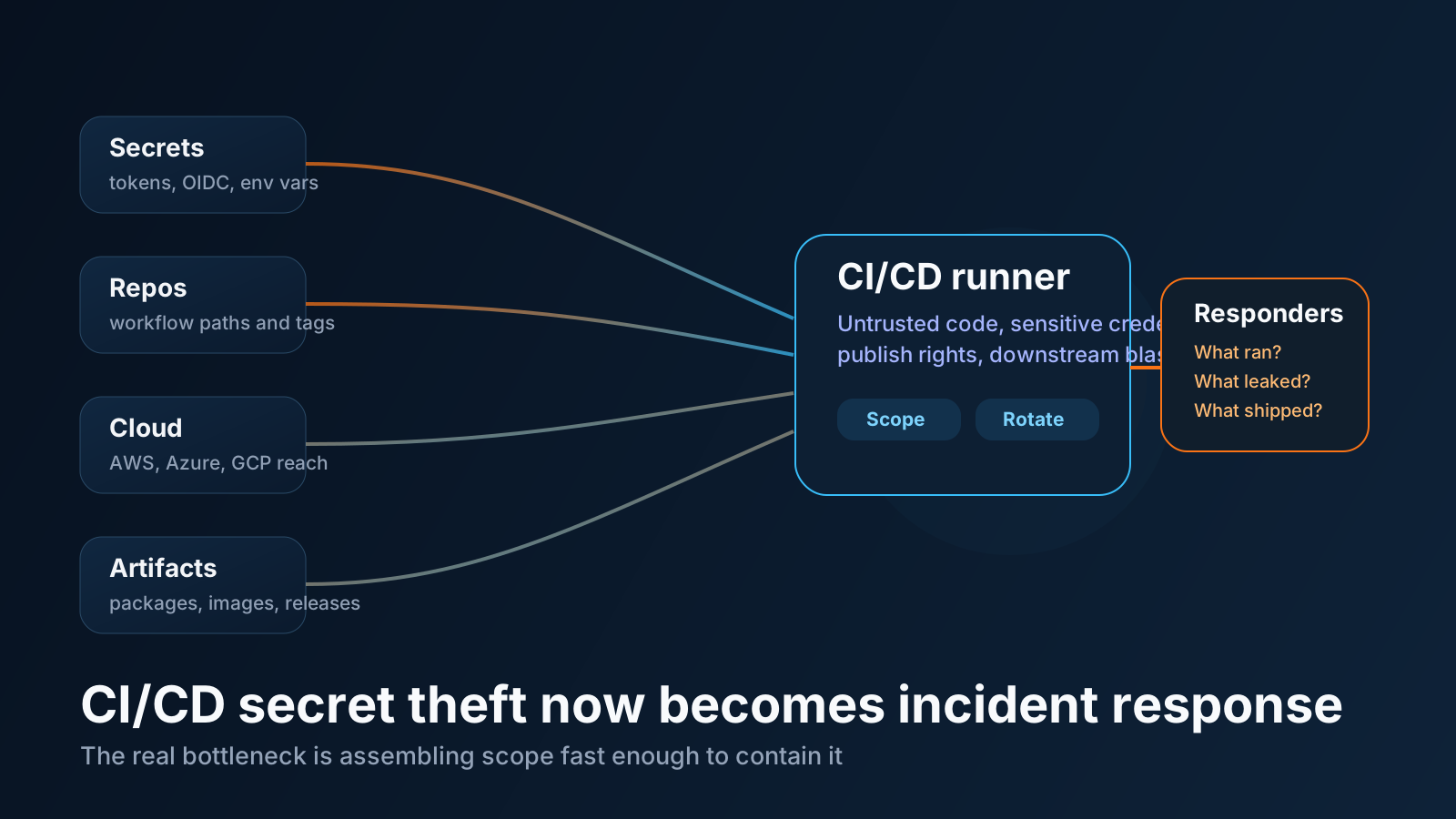
The real drag is usually not realizing the pipeline is part of the incident. It is reconstructing the scope fast enough to act well.
Why GitHub is now talking like this is critical infrastructure
GitHub's 2026 Actions security roadmap makes the shift unusually explicit.
It says CI/CD infrastructure is critical infrastructure, runners execute untrusted code, handle sensitive credentials, and interact with external systems and input. It also says teams often have limited insight into what executed, where data flowed, or how a compromise unfolded.
That is incident language, not just platform language.
GitHub is responding with more observability and control, including the Actions Data Stream and a native egress firewall for hosted runners. Whether or not your team uses those exact capabilities, the framing is the important part: build automation now needs to be observable and governable like any other production-adjacent system.
Five response and hardening moves that matter most
1. Scope credentials like they will be stolen
This sounds harsh, but the June 2026 threat research supports it.
If workflows carry broad repo, cloud, or registry permissions, attackers do not need many extra steps once they land. The response burden gets much worse when every credential is also a lateral-movement bridge.
Least privilege is not just a hardening principle here. It is a blast-radius control.
2. Track what the runner could reach, not just what the YAML says
The actual incident surface includes the runner environment, fetched actions, network egress, cloud metadata paths, package registries, and any secrets mounted during execution.
If you only review workflow YAML after the fact, you still might miss what the environment made reachable.
3. Treat publish windows like exposure windows
If a compromised workflow could publish artifacts, tags, or packages, responders need to know exactly what happened during the suspect window.
That means correlating:
- workflow runs
- dependency resolution
- produced artifacts
- published package versions
- branch and tag changes
Containment gets a lot cleaner when teams can map those paths quickly.
4. Build a rotation order before the incident
Not every credential should be rotated in the same order.
In practice, teams need a clear sequence for:
- package publishing credentials or trusted-publisher relationships
- GitHub tokens and org secrets
- cloud identities used by workflows
- Vault, Kubernetes, or service credentials exposed during jobs
Without that order, incident calls get noisy and teams either over-rotate or miss the dangerous path first.
5. Make CI/CD telemetry visible to responders
GitHub's roadmap is right about this. If CI/CD is critical infrastructure, it needs visibility and policy instead of postmortem guesswork.
Responders should be able to answer:
- what ran
- what it fetched
- what secrets it touched
- where it connected
- what it published
That is the operational baseline.
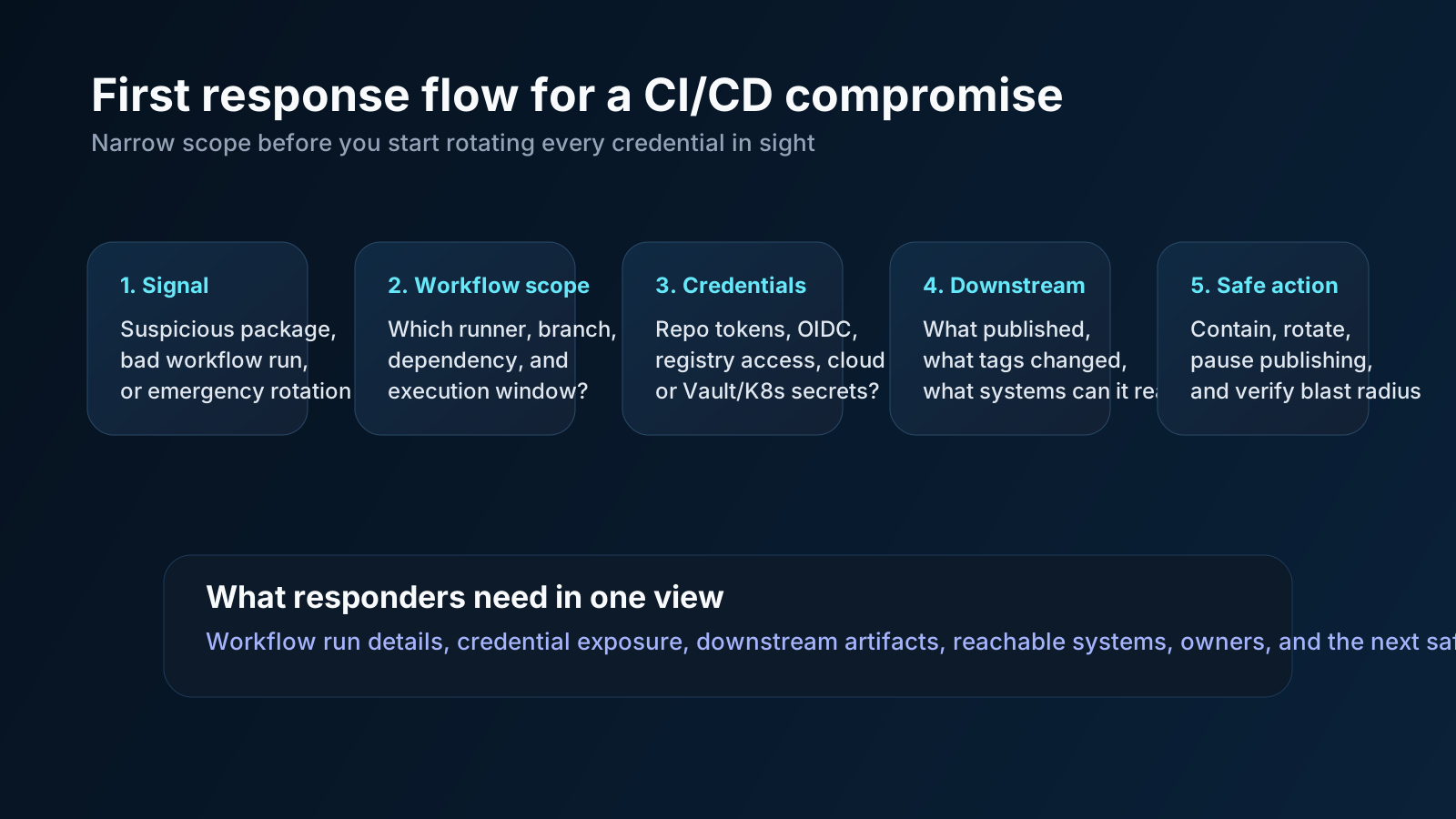
A good response flow narrows scope fast instead of sending five people into five different consoles without a shared picture.
Where OpsRabbit fits
OpsRabbit is useful in the messy middle of incidents like this.
The product story is not "we replace CI/CD security controls." The more practical story is that responders still need a fast, usable picture of what changed, which systems and credentials are in scope, who owns the next decision, and what action is safest to validate first.
That is exactly where incidents lose time today.
When the compromise path touches build systems, package ecosystems, cloud identities, and incident coordination at once, the winning move is usually not one more dashboard. It is faster context assembly.
Final thought
I do not think teams should walk away from incidents like the Red Hat npm compromise thinking trusted publishing failed or GitHub Actions is the problem.
The better lesson is that CI/CD now sits close enough to identity, cloud access, and software distribution that compromise turns into operations work immediately.
Once that happens, the clock is not only ticking on remediation.
It is ticking on context.
The teams that handle this well will be the ones that can quickly answer what ran, what it touched, what it published, what credentials were exposed, and what the safest next step is.
FAQs
Why is CI/CD compromise an ops issue instead of only an AppSec issue?
Because build systems often hold real credentials, touch production-adjacent services, publish artifacts, and affect downstream runtime environments. Once those paths are compromised, operations teams need to contain and coordinate the incident quickly.
Does trusted publishing solve this by itself?
No. Trusted publishing reduces some credential-management risks, but a compromised workflow or maintainer path can still abuse that trusted channel. Teams still need scoped permissions, visibility, and incident-ready response playbooks.
Sources
- RHSB-2026-006 Supply chain compromise of @redhat-cloud-services npm packages - Red Hat Customer Portal, June 1, 2026; updated June 3, 2026.
- Preinstall to persistence: Inside the Red Hat npm Miasma credential-stealing campaign - Microsoft Security Blog, June 2, 2026.
- Securing the open source supply chain across GitHub - GitHub Blog, April 1, 2026.
- What's coming to our GitHub Actions 2026 security roadmap - GitHub Blog, March 26, 2026; updated March 30, 2026.
- Investigation update: GitHub Enterprise Server signing key rotation - GitHub Blog, original post published May 20, 2026.
Last Updated
2026-06-04
Ready to Transform Your Operations?
Ask for a demo today. Experience how OpsRabbit can reduce your MTTR by up to 90%.