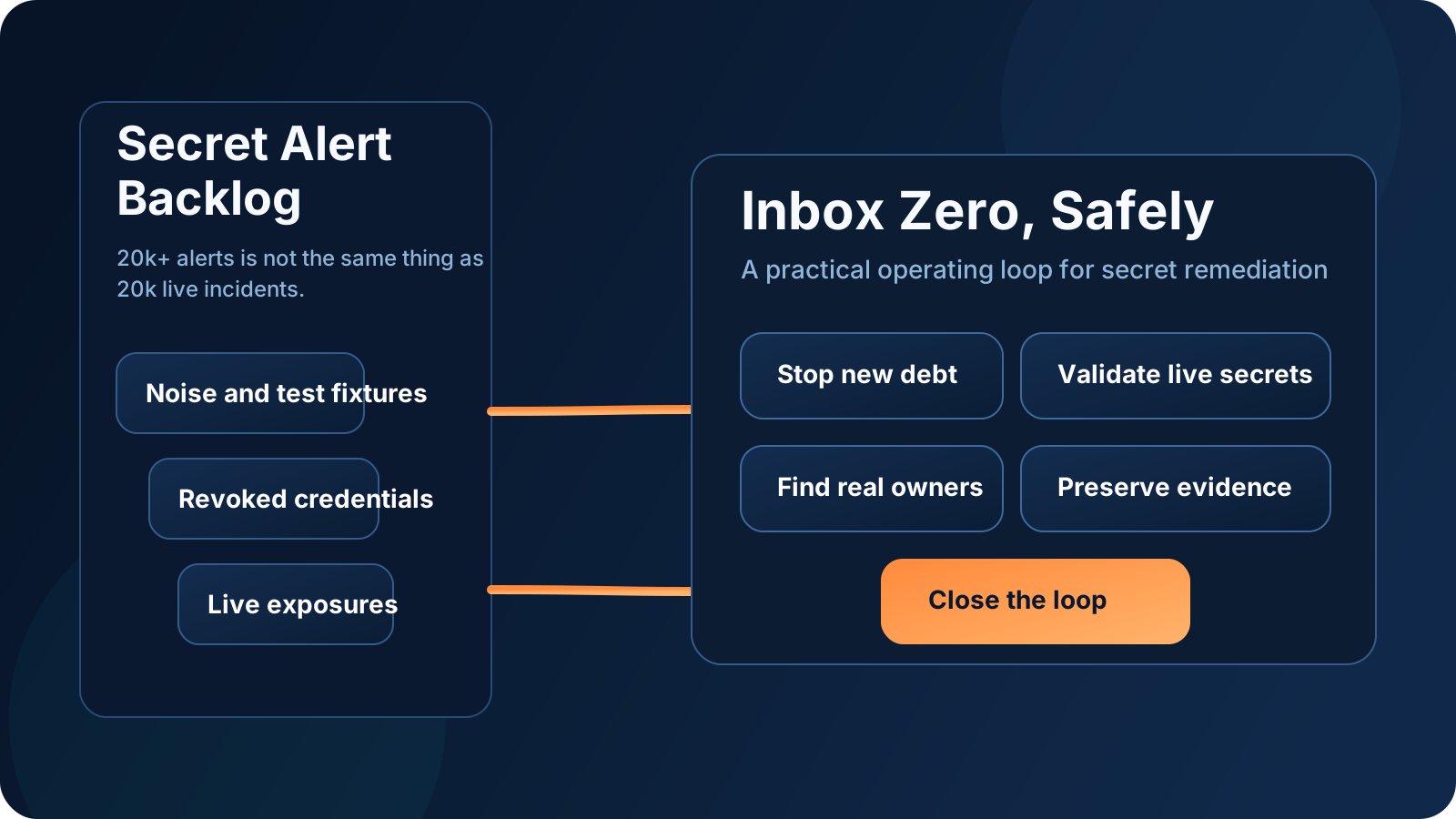
Quick answer: Getting secret-scanning alerts to inbox zero safely is not about blindly closing alerts or rewriting history. It is about stopping new exposure, validating which secrets are still live, finding the right owners, and remediating in a way that preserves the evidence you may need later.
TL;DR
- GitHub's July 2026 secret-scanning case study is a good reminder that alert volume is not the same as live risk.
- The fastest way to reduce a backlog is usually to stop new debt first, then separate inactive noise from real exposure.
- Ownership and audit-trail decisions matter as much as scanner coverage.
- Teams that move fastest are usually the ones that can assemble context quickly enough to rotate or revoke safely.
What changed
GitHub published a practical write-up on July 2 about how it worked through more than 20,000 secret-scanning alerts spread across more than 15,000 repositories.
That number sounds terrible until you see the next detail.
Roughly 18,000 of those alerts were concentrated in five repositories, and all of them turned out to be inactive secrets such as test fixtures, deactivated credentials, or fake-but-valid-looking values.
That is exactly why this story matters.
The problem was not "20,000 equally dangerous secrets." The problem was figuring out which alerts represented real exposure, who owned the systems behind them, and how to remediate without creating new operational damage.
For teams trying to tighten secret hygiene right now, that is the useful lesson.
Alert count is not risk count
A large secret-scanning backlog usually mixes at least four different kinds of work:
- old inactive test material
- revoked or already-rotated credentials
- real live secrets that need action now
- awkward edge cases where the safest remediation path is not obvious
If you treat all of that as one undifferentiated pile, the backlog looks impossible.
GitHub's approach is a strong reminder that the first win often comes from classification, not heroics.
Before trying to grind through every alert manually, the smarter questions are:
- which alert classes are obviously low risk
- which alerts may still represent active credentials
- which business systems or repositories need ownership lookup
- which cases could damage auditability if handled carelessly
That is how the work becomes tractable.
The first priority is to stop new debt
GitHub did not start by treating backlog cleanup like an archaeological expedition.
It first enabled secret scanning and push protection broadly so the problem would stop growing faster than the team could burn it down.
That step is easy to underestimate, but it changes everything.
If new secrets keep landing while you are cleaning up old ones, your backlog is not really shrinking. It is just moving.
This is why preventative controls matter operationally, not just theoretically. Push protection is not only a security feature. It is a workflow stabilizer.
Once the inflow slows down, teams can work the older backlog with a lot more confidence.
The real work starts after detection
Even after the alert count becomes manageable, the hard questions are still operational:
- Is the exposed credential actually still valid?
- What system, service, or account does it touch?
- Who can rotate or revoke it without breaking production unexpectedly?
- Do we need to preserve the current state for audit or incident review before changing anything?
This is the part many teams still handle with too many tabs, too much tribal knowledge, and not enough ownership metadata.
GitHub's case study makes that visible too. The team needed validity checks, routing logic, and durable ownership so alerts could move to the right people with enough context to act.
That is why secret scanning at scale becomes a workflow problem, not just a detection problem.
Why evidence preservation changes the remediation path
One of the most useful parts of GitHub's write-up is the warning against reflexive cleanup.
Deleting a repository or rewriting history might feel satisfying, but it can also remove the forensic trail you would want during incident review. A revoked secret sitting in history is not ideal, but neither is destroying the record of what happened without a strong reason.
That is a very operational point.
The safest remediation path is not always the most aggressive-looking one. In many cases it is:
- rotate or revoke the exposed credential first
- confirm the blast radius and ownership
- decide whether history rewriting is truly worth the disruption
That sequence gives teams a better balance between containment, auditability, and developer impact.
A practical operating loop for secret-scanning backlogs
If you are trying to get to inbox zero without turning the effort into chaos, a simple loop works better than an ad hoc cleanup sprint.
1. Stop new exposure
Turn on and enforce the preventative controls you trust, including push protection where supported.
2. Separate obvious noise from work
Group alerts by repository, secret type, age, and known test patterns so low-risk bulk closure is possible when you can prove it.
3. Validate what is still live
Do not escalate every alert equally. Find out which credentials still work and which ones are already dead.
4. Route to real owners
A secret cannot be rotated by a dashboard. Someone has to own the service, account, or workflow behind it.
5. Rotate or revoke before destructive cleanup
Contain the live risk first, then decide whether history changes are necessary.
6. Record the decision trail
Backlogs stay manageable when teams capture why an alert was closed, rotated, accepted, or escalated.
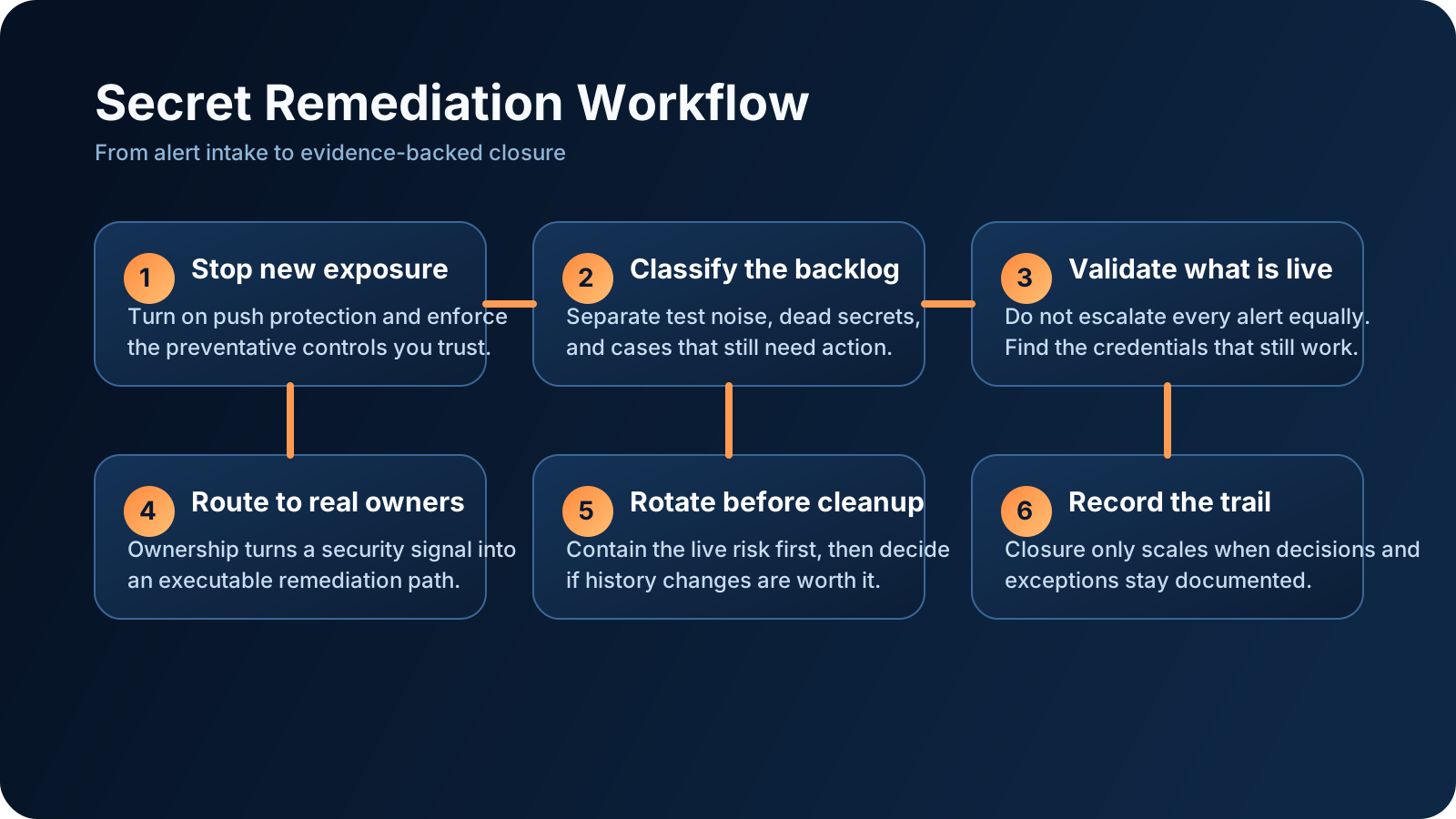
A usable remediation loop starts by stopping new debt, then turns the old backlog into owned and evidence-backed decisions.
Where OpsRabbit fits
GitHub gives teams better native detection and prevention. That is valuable.
But once a real exposure needs action, the bottleneck often shifts to context:
- what changed recently
- what system dependencies are involved
- who owns the affected service
- what evidence responders need before rotating or revoking
- what the next safe action should be
That is where OpsRabbit fits.
OpsRabbit helps teams compress the time between an alert and a confident remediation decision by assembling the operational context around the problem instead of leaving responders to stitch it together manually.
In practice, that means less time hunting for owners, less uncertainty about blast radius, and fewer remediation decisions made in the dark.
Practical takeaway
If your team has a large secret-scanning backlog, the answer is probably not "close alerts faster."
The better question is whether your responders can move from an alert to a safe next action without getting lost in ownership gaps, stale assumptions, and destructive cleanup choices.
That is the real inbox-zero test.
And if you can pass that test, the backlog usually gets smaller for the right reasons, not just prettier on a dashboard.
CTA
If you want to shorten the path from secret exposure to a safe, evidence-backed remediation step, book a walkthrough to see how OpsRabbit reduces time-to-context for real incident and remediation workflows.
FAQs
What is the first step in reducing a secret-scanning backlog?
Stop new debt first by enforcing preventative controls such as push protection, then work down the legacy backlog with a repeatable triage process.
Should teams always rewrite git history after a secret is found?
No. Rotate or revoke the exposed secret first, then decide whether history rewriting is worth the operational risk and loss of forensic context.
Sources
- GitHub, How GitHub used secret scanning to reach inbox zero - published July 2, 2026.
- GitHub Docs, About secret scanning - accessed July 3, 2026.
- GitHub Docs, About push protection - accessed July 3, 2026.
- GitHub, Making secret scanning more trustworthy: Reducing false positives at scale - published June 11, 2026.
Last Updated
2026-07-03
Ready to Transform Your Operations?
Ask for a demo today. Experience how OpsRabbit can reduce your MTTR by up to 90%.