Quick answer: Kubernetes finally made kubelet authorization more precise in v1.36, but many environments still rely on old
nodes/proxygrants. That matters because the permission can be much broader than teams expect, especially when production debugging and incident response get messy.
TL;DR
- Kubernetes v1.36 moved fine-grained kubelet authorization to GA.
- That change exists because the old coarse mapping pushed many kubelet API paths through
nodes/proxy. - Kubernetes says direct kubelet API access is not subject to admission control and is not logged by Kubernetes audit logging.
- The new model helps, but backward-compatible fallback means broad
nodes/proxyaccess can stay around unless teams remove it on purpose.
What problem are we solving?
Most Kubernetes access problems do not start with obvious bad intent. They start with convenience.
A team needs node metrics. A troubleshooting workflow needs kubelet health. A production debugging path needs to work quickly. A platform integration gets broad access because nobody wants to break it during an incident.
That is how permissions like nodes/proxy stick around.
The trouble is that a permission originally justified for observability or break-glass response can quietly become part of a much bigger incident story later.
If responders, automation, or third-party tooling still carry broad kubelet access, the risk is not only theoretical. It affects how safely you can debug, how much evidence you can trust, and how quickly you can answer the question every incident room asks first:
What exactly can this identity touch right now?
Short answer
nodes/proxy is dangerous because it used to be the catch-all path for much of the kubelet API, and Kubernetes kept compatibility in place even after introducing finer controls. So the upstream change is good news, but it is not a cleanup crew.
Teams still need to find out where nodes/proxy is granted, why it is still needed, and whether newer fine-grained kubelet subresources can replace it.
What changed in Kubernetes v1.36
On April 24, 2026, Kubernetes announced that fine-grained kubelet API authorization had reached GA in v1.36.
The reason this matters is pretty blunt. The Kubernetes announcement explains that under the older authorization model, almost all kubelet API paths mapped to a single subresource: nodes/proxy.
That meant teams often granted nodes/proxy for simple things like metrics or health access, even though the same permission was broader than those narrow use cases required.
The new model is better.
Kubernetes now maps several kubelet API paths to dedicated subresources like:
nodes/statsnodes/metricsnodes/lognodes/specnodes/checkpoint
And with the KubeletFineGrainedAuthz behavior, additional paths like /pods, /runningPods, /healthz, and /configz get more specific checks before the kubelet falls back to nodes/proxy.
That is an upgrade in RBAC precision.
It is not, by itself, a guarantee that your environment is now precise.
Why the risk still exists
This is the detail I think many teams will miss.
The Kubernetes docs preserve compatibility by falling back to nodes/proxy when needed. That is helpful for upgrades because it prevents older integrations from breaking overnight.
It also means stale broad access can survive the upgrade untouched.
So if your cluster already had:
- service accounts with
nodes/proxy - debugging roles that leaned on kubelet proxy access
- internal tools using overly broad node subresource permissions
- break-glass roles nobody has reviewed in months
then v1.36 does not magically narrow them for you.
The platform has created a safer path. Your team still has to walk it.
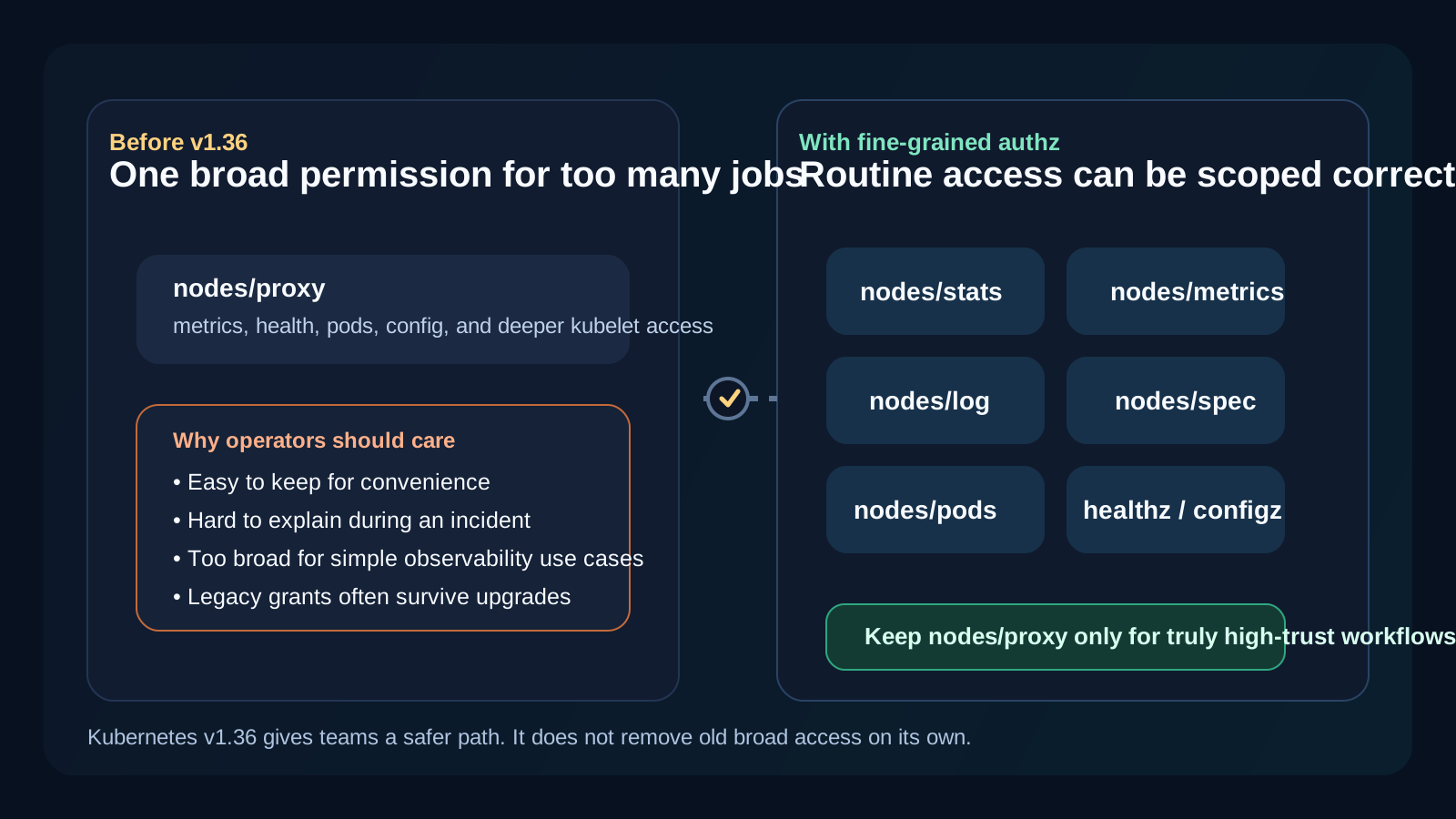
Kubernetes made kubelet authorization more precise. The operational risk stays high until teams remove the old broad access that compatibility still allows.
Why this matters during incidents
Kubernetes says direct kubelet API access is not subject to admission control and is not logged by Kubernetes audit logging.
That line should make operators pause.
Because incident response is exactly when people reach for the fastest path:
- broad debug access
- old service accounts
- emergency scripts
- automation whose permissions were never properly narrowed
If a kubelet-related permission is too wide, the problem is not just policy hygiene. It becomes an investigation problem.
Now the responder needs to figure out:
- which identities still have
nodes/proxy - which workloads or tools depend on those identities
- which nodes are in scope
- whether access was used recently
- whether the issue is safe to contain without breaking a critical debug path
That is not a clean RBAC checklist anymore. That is time-to-context.
The practical operator view
The most useful reading of the v1.36 change is not "Kubernetes fixed kubelet security."
It is:
Kubernetes finally made it practical to stop overloading nodes/proxy for routine access patterns.
That creates a concrete cleanup opportunity.
For most teams, the right next step is to separate kubelet use cases into buckets:
1. Metrics and health access
If the real need is metrics, logs, health, or pod listing, see whether the new dedicated subresources cover the workflow. These are the easiest wins because they are usually read-oriented and repetitive.
2. Production debugging access
If a human needs temporary deep access, treat that as a just-in-time workflow, not as a standing permission glued to a long-lived role.
Kubernetes' production debugging guidance makes this point clearly: broad standing access is convenient in the moment, but it weakens auditing and turns temporary exceptions into routine practice.
3. Legacy integrations and unknown consumers
This is usually the hardest bucket. Some internal job, agent, or vendor integration still uses nodes/proxy, but no one remembers exactly why. That is where teams lose hours in change reviews and real incidents.
A safer cleanup sequence
If I were reviewing this in a live environment, I would keep it simple:
- Inventory every ClusterRole and Role that grants node subresource access.
- Flag any grants to
nodes/proxy. - Map those grants to actual subjects, service accounts, and automation paths.
- Check whether the access exists for metrics, health, pod visibility, or real command-capable workflows.
- Replace broad grants with the narrower kubelet subresources where possible.
- Keep truly powerful access behind short-lived, identity-bound debugging workflows.
The technology change is straightforward. The messy part is dependency discovery.
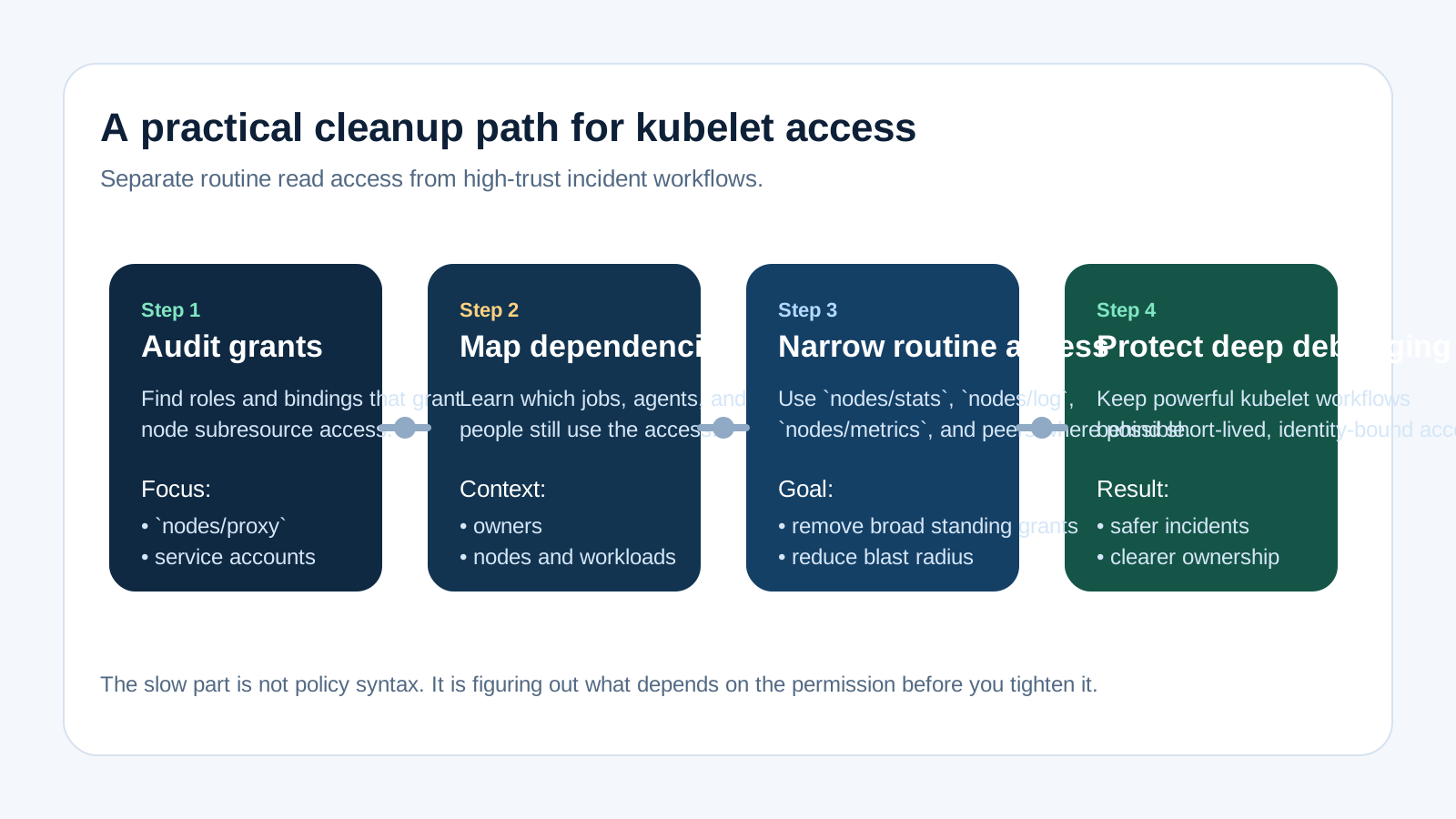
Separate routine kubelet access from high-trust incident workflows so you can harden safely without slowing response.
Where teams usually get stuck
Very few teams struggle with the sentence "least privilege is good."
They struggle with questions like:
- Which team owns this service account?
- Does this internal agent still need kubelet proxy access?
- Which production workflows break if we remove it?
- Which nodes and workloads are connected to that identity?
- What changed recently that made this access relevant again?
That is why kubelet hardening often stalls.
The blocker is not agreement. It is context assembly.
Where OpsRabbit fits
OpsRabbit is useful here because kubelet exposure is not just an RBAC problem. It becomes an incident-response problem the moment a team has to make fast decisions under uncertainty.
Responders need to assemble:
- impacted services and owners
- recent deploy or policy changes
- related nodes, workloads, and integrations
- the narrowest safe next action
That is exactly the gap between "we know this permission is risky" and "we can fix or contain this without guessing."
OpsRabbit helps shorten that gap.
Final thought
I like this Kubernetes change because it is practical. It gives platform teams a cleaner way to express what they actually mean.
But the real value does not come from upgrading to v1.36 alone.
It comes from using that upgrade to clean out old nodes/proxy habits before the next incident forces you to understand them in a hurry.
If your team is already tightening production debugging, revisiting service account sprawl, or preparing for tougher incident reviews, this is a very good time to audit kubelet access.
FAQs
Why is nodes/proxy risky in Kubernetes?
Because it has historically covered broad kubelet API access, and Kubernetes warns that direct kubelet API access can bypass admission control and Kubernetes audit logging.
Did Kubernetes v1.36 eliminate the need to review old kubelet access?
No. Fine-grained kubelet authorization helps, but the compatibility fallback to nodes/proxy means existing broad grants may still remain in use until teams tighten RBAC intentionally.
Sources
- Kubernetes v1.36: Fine-Grained Kubelet API Authorization Graduates to GA - Kubernetes Blog, April 24, 2026.
- Kubelet authentication/authorization - Kubernetes Documentation, accessed June 11, 2026.
- Kubernetes API Server Bypass Risks - Kubernetes Documentation, accessed June 11, 2026.
- Securing Production Debugging in Kubernetes - Kubernetes Blog, March 18, 2026.
Last Updated
2026-06-11
Ready to Transform Your Operations?
Ask for a demo today. Experience how OpsRabbit can reduce your MTTR by up to 90%.