Quick answer: GitHub's 2026 Actions roadmap is turning workflow security from a YAML-hardening exercise into a platform change-management problem. Dependency locking, execution protections, and scoped secrets all change how workflows behave in production, which means platform teams need a staged rollout plan, not just better linting.
TL;DR
- GitHub is responding to recent CI/CD and supply-chain attacks by adding workflow dependency locking, centralized execution protections, and scoped secrets to Actions.
- Those changes are good security moves, but they also create a real rollout problem for platform teams that manage lots of workflows, reusable pipelines, and shared credentials.
- The first operational challenge is not understanding the roadmap. It is figuring out which workflows will break, which teams are affected, and which changes should be staged separately.
- OpsRabbit fits in the time-to-context gap after a workflow or policy change goes sideways and responders need one usable picture fast.
What changed in GitHub's 2026 roadmap
GitHub's March 2026 Actions security roadmap says recent incidents involving projects like tj-actions/changed-files, Nx, and trivy-action show that attackers are increasingly targeting CI/CD automation itself, not just the software it builds.
That is the backdrop for three roadmap changes that matter most to platform teams:
- workflow-level dependency locking
- workflow execution protections built on GitHub's ruleset framework
- scoped secrets tied to explicit execution context
GitHub also says many open-source attacks now focus on exfiltrating secrets and often start by compromising a workflow on GitHub Actions. So this is not a vague "maybe one day" roadmap. It is GitHub trying to shrink a supply-chain attack surface that has already been exploited in the wild.
Why this is a change-management problem, not just a workflow-edit problem
Teams already know the high-level advice:
- pin dependencies
- reduce trigger risk
- minimize secret scope
- treat untrusted pull requests carefully
The trouble starts when those ideas become real platform changes.
At that point, the questions stop sounding like policy questions and start sounding like incident or release questions:
- Which workflows still depend on mutable Action references?
- Which repos would get blocked if we tighten triggers or event rules?
- Which reusable workflows silently rely on inherited credentials today?
- How do we test these controls without stalling delivery for half the engineering org?
That is why I think the phrase "dependency locking" is a little too narrow. The more useful framing is that GitHub is giving platform teams new control surfaces, and control surfaces always need rollout discipline.
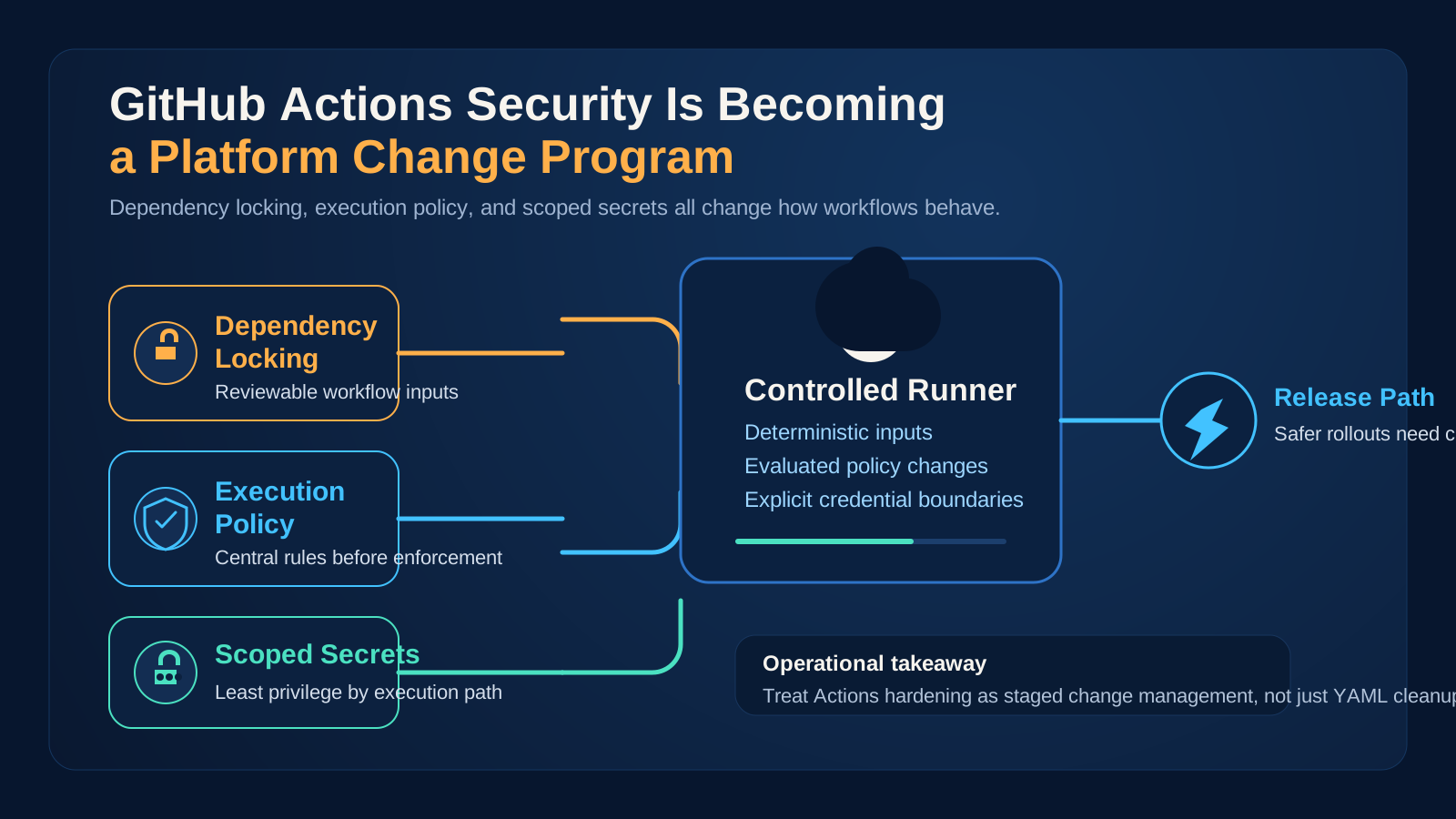
The risk is not only malicious workflow drift. It is also rollout drift when teams change dependencies, policy, and credentials all at once.
Dependency locking changes the review surface
GitHub's roadmap introduces a dependencies: section in workflow YAML that locks both direct and transitive workflow dependencies with commit SHAs.
That is a meaningful shift because today's Actions dependency model is still too easy to treat like a black box. Mutable tags and nested dependencies make it hard to know exactly what a workflow ran and when something changed.
GitHub's pitch is practical:
- deterministic workflow runs
- reviewable dependency updates
- fail-fast verification when hashes do not match
- clearer visibility into composite action dependencies
All of that helps.
It also means platform teams need a process for:
- generating lock data
- reviewing dependency changes
- deciding who owns updates
- distinguishing a legitimate dependency refresh from suspicious drift
That is workflow change control, whether teams label it that way or not.
Execution protections move trust decisions into central policy
GitHub is also moving workflow execution protections into the ruleset framework so organizations can centrally govern who can trigger workflows and which events are allowed.
That matters because a lot of workflow risk still comes from small trust-boundary mistakes.
GitHub Security Lab's guidance on pull_request_target is still one of the clearest examples. Mixing privileged triggers with checkout of untrusted pull request code can turn an automation shortcut into repository compromise or secret theft.
Central policy is a better model than hoping every repository keeps that logic straight forever.
But central policy also increases the operational importance of safe rollout. One badly staged ruleset can affect a lot of repositories quickly.
That is why GitHub's planned evaluate mode is such a big deal. It lets teams see which workflow runs would have been blocked before they enforce a rule. In practice, that should be treated as the default rollout path, not a bonus feature.
Scoped secrets will expose hidden workflow dependencies
The roadmap's scoped secrets capability may be the most quietly disruptive change for platform teams.
GitHub says secrets will be bound to explicit execution contexts like repositories, branches, environments, workflow identities, or trusted reusable workflows. Secrets will no longer flow as implicitly as many teams are used to today.
Security-wise, that is exactly the right direction.
Operationally, it means teams are going to discover how many workflows depend on credential paths they never documented clearly.
That shows up in very ordinary ways:
- a reusable workflow stops receiving the secret it used to inherit
- a deployment workflow works on one branch but not another
- a package publish flow loses access after a trust boundary is tightened
- responders cannot tell whether a failure is policy-related, dependency-related, or identity-related
Scoped secrets do not just improve least privilege. They force hidden trust assumptions into the open.
A rollout checklist for platform teams
If this were my rollout, I would not treat it as one giant "Actions hardening" project. I would separate the moving parts.
1. Inventory the workflows with real blast radius
Start with publish, deploy, cloud-access, and external-PR workflows. Those are the workflows where mutable dependencies, risky triggers, and broad secret scope are most likely to become an incident.
2. Use evaluate mode before enforcing policy
Do not move straight from idea to enforcement. First learn which workflows, teams, and events would be blocked. That is the cleanest way to find hidden dependencies without creating a self-inflicted release outage.
3. Split dependency locking from policy rollout
If you change lock behavior and execution policy at the same time, failure analysis gets muddy. Stage them separately when possible so teams can tell whether a break came from dependency verification, trigger rules, or secret scope.
4. Map reusable workflows and secret paths explicitly
This is where many teams get surprised. Reusable workflows feel centralized, but the trust boundary is often still fuzzy. Before scoped secrets arrive, document which workflows consume which credentials and under what conditions.
5. Prepare an incident path for rollout failures
Even clean rollouts create some breakage. When that happens, responders need one shared story fast:
- what changed
- which workflow failed
- which repo, branch, or event is involved
- whether the issue looks like policy, dependency, or credentials
- what the safest next action is
That is the point where time-to-context starts to matter more than time-to-detect.
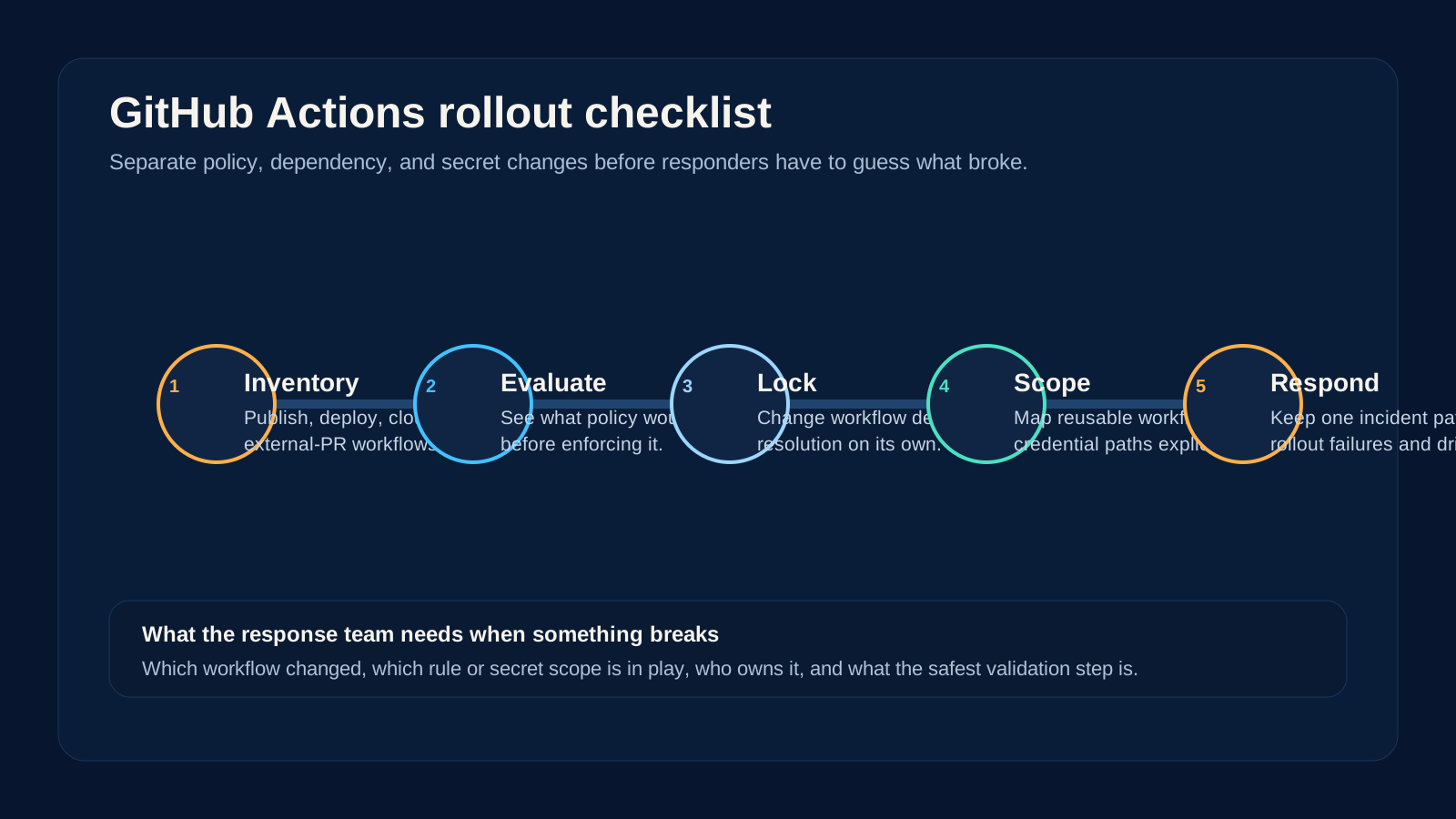
A good rollout keeps policy, dependency, and credential changes separate enough that responders do not have to guess what broke.
Where OpsRabbit fits
OpsRabbit is not a replacement for GitHub's native Actions controls. That is not the story here.
The practical story is what happens after a workflow or policy change creates uncertainty.
Maybe dependency locking causes a release job to fail. Maybe a reusable workflow loses access to a credential it used to inherit. Maybe a new ruleset would have blocked a manual trigger and now nobody is sure whether the problem is event policy, repo ownership, or secret scope.
That is where OpsRabbit helps.
The value is faster time-to-context around questions like:
- what changed recently
- which workflows and owners are involved
- what adjacent systems the workflow touches
- what credential scope is in play
- what the safest next validation step is
That is the messy middle where platform teams still lose time today.
Final thought
I do not think teams should read GitHub's 2026 roadmap as "more security work later."
The better reading is that GitHub is turning Actions hardening into a real platform operations problem now.
The teams that handle this well will not just pin more things or tighten more settings. They will stage the rollout, map the trust paths, and make sure responders can tell the difference between a blocked attack and a broken workflow.
FAQs
Why is dependency locking more than a security hygiene task?
Because once dependency locking changes how workflows resolve and verify actions, platform teams need staged rollout, owner review, and a clear way to debug failures without stalling delivery.
What should teams do before enforcing new Actions policies?
Inventory high-risk workflows, use evaluate mode first, separate dependency and policy changes, map reusable workflow secret paths, and prepare an incident path for rollout failures.
Sources
- What's coming to our GitHub Actions 2026 security roadmap - GitHub Blog, March 26, 2026; updated March 30, 2026.
- Securing the open source supply chain across GitHub - GitHub Blog, April 1, 2026.
- Keeping your GitHub Actions and workflows secure Part 1: Preventing pwn requests - GitHub Security Lab, accessed July 6, 2026.
- Secure use reference - GitHub Docs, accessed July 6, 2026.
- Immutable releases - GitHub Docs, accessed July 6, 2026.
Last Updated
2026-07-06
Ready to Transform Your Operations?
Ask for a demo today. Experience how OpsRabbit can reduce your MTTR by up to 90%.