Quick answer: revoking credentials is no longer a late cleanup task. When one token, SSH key, app authorization, or agent identity can reach CI/CD, SaaS actions, and cloud resources at once, revocation becomes one of the first real containment moves.
TL;DR
- GitHub now treats bulk and self-service credential revocation as a first-class incident response workflow.
- Recent CI/CD attacks showed how a stolen identity can fan out across GitHub, npm, cloud accounts, Vault, and Kubernetes.
- AI-connected apps make the blast radius messier because one user identity or agent identity can suddenly act across external systems.
- The operational challenge is not just speed. It is revoking the right identity path without breaking the wrong automation first.
What changed
Teams rarely struggle to understand that compromised access should be revoked.
They struggle to answer three messier questions under pressure:
- Which credential is actually in play?
- What systems does it reach right now?
- What breaks if we revoke it immediately?
That used to be a narrower problem. One personal access token might affect one repo. One cloud key might affect one workload. One OAuth app might affect one SaaS integration.
That is not the environment most teams operate in now.
The same incident can involve:
- GitHub tokens used by CI/CD
- SSH keys used by engineers or automation
- SaaS app authorizations
- service accounts behind agent tools
- user identities delegated into AI apps and MCP-connected systems
Once those paths overlap, credential revocation stops being an admin chore and becomes a first-hour response workflow.
GitHub made that shift explicit on June 24, 2026.
Its new incident-response capabilities let enterprise owners revoke SSO authorizations for user credentials across an enterprise, and for managed-user environments delete user tokens and SSH keys across the enterprise. GitHub also added a self-service flow so individual users can revoke or delete all credentials in one action instead of going token by token.
GitHub's own documentation is blunt about the tradeoff. Revoke everything, and scripts, CI/CD pipelines, or automated processes using those credentials will stop working. That is good when the compromised path is still active. It is painful when nobody knows what the credential was doing first.
At the same time, GitHub's 2026 Actions security roadmap says CI/CD infrastructure is critical infrastructure because runners execute untrusted code, handle sensitive credentials, and interact with external systems.
That matches what June's npm Miasma campaign demonstrated. Microsoft's analysis said the malware stole GitHub, npm, AWS, Azure, GCP, Vault, and Kubernetes credentials, and even scraped secrets from GitHub Actions runner memory.
Short answer
Credential revocation is now a first-hour workflow because containment often depends on cutting access before an attacker can keep moving.
But the winning move is not blind mass rotation.
The winning move is knowing:
- which identity path matters most
- what that identity can still reach
- what business workflows will fail if you cut it
- which replacement identity and re-authorization path are ready
That is why time-to-context matters here as much as time-to-revoke.
What the first 30 minutes usually look like
When a suspicious credential event appears, responders usually do not start with a clean graph of everything that token touches.
They start with fragments:
- an alert about a package, workflow run, or suspicious login
- a request to rotate credentials immediately
- a broken app authorization or unusual tool action
- a report that an assistant connected to the wrong system
Then the same questions come fast:
- Is this a user credential, a service credential, or an app authorization?
- Is the safest move bulk revoke, partial revoke, or isolation first?
- What production workflows will fail if we cut it now?
- Do we already have a replacement identity and re-authorization path ready?
That is where incidents lose time.
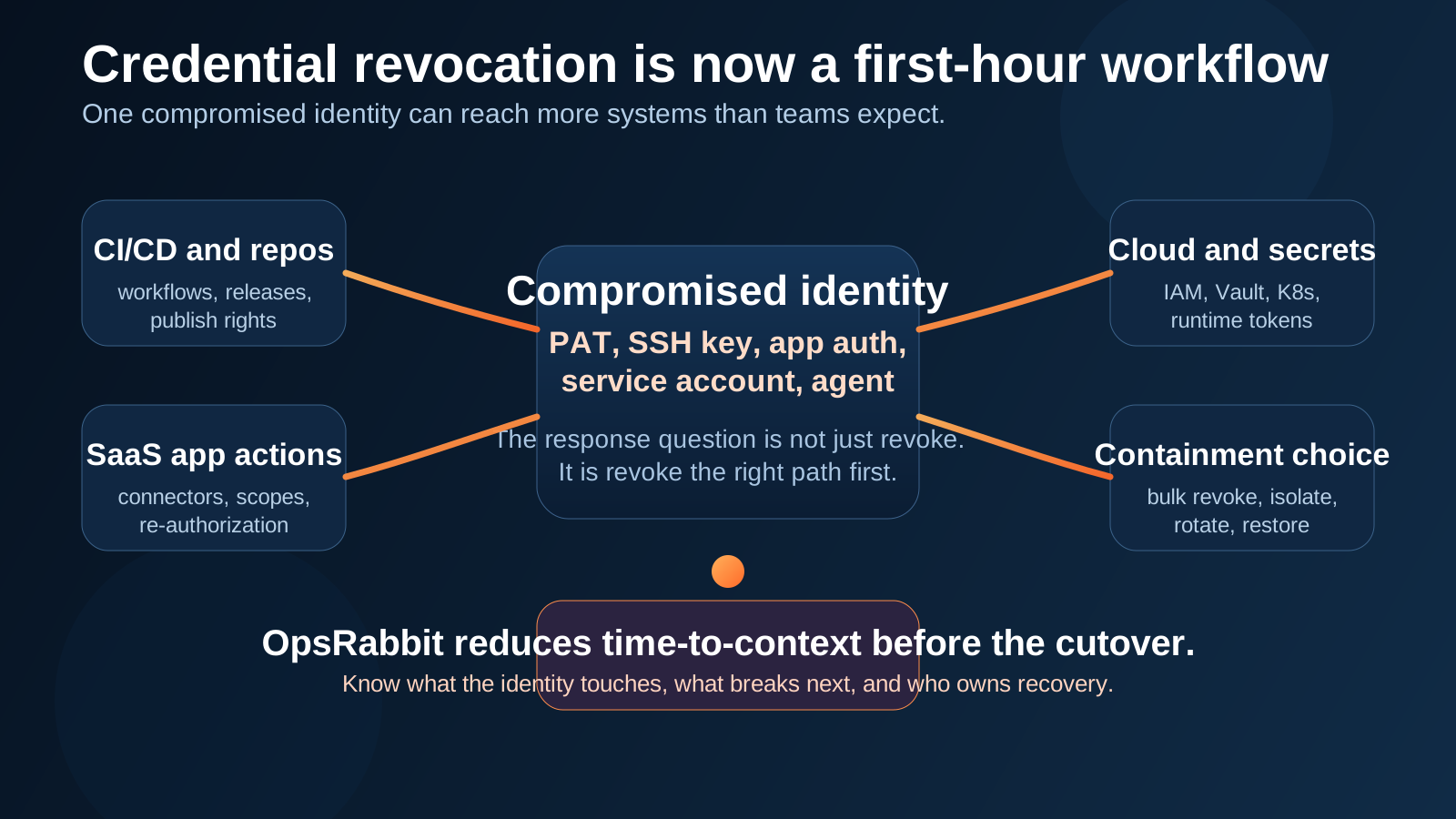
The bottleneck is not realizing revocation matters. It is building enough context to revoke the right path first.
Five priorities that keep revocation from turning into self-inflicted downtime
1. Separate user credentials from runtime identities
If a user's credentials still power critical automation, bulk revocation may be necessary and disruptive at the same time.
Teams should know whether they are dealing with:
- a human-owned token or SSH key
- a CI/CD runtime token
- a service account
- an app or connector authorization
- an agent identity
Those are different containment decisions.
2. Map reachable systems before bulk revocation
The June npm Miasma campaign is a good reminder that one compromised identity can bridge into multiple platforms quickly.
Before revoking, responders need to know at least:
- which repos, pipelines, or jobs used the credential
- which cloud resources or secrets stores it could reach
- which SaaS actions or app scopes depended on it
- whether it touched production-facing workflows
You do not need a perfect graph. You need enough context to avoid guessing.
3. Revoke in the order that reduces blast radius fastest
Not every credential should be cut in the same sequence.
In practice, teams often need to prioritize:
- credentials that can still write, publish, or deploy
- identities with broad read access to sensitive systems
- app authorizations that expand the attacker path
- secondary credentials used only for restore or investigation
This is why "rotate everything now" is incomplete advice. Order matters.
4. Plan breakage and re-authorization as part of containment
GitHub's revocation docs warn that automation will break. OpenAI's Google app guidance warns that users may need new scope authorization before actions work again.
That means revoke-and-restore is one workflow, not two unrelated tasks.
Responders should know:
- which business workflows will fail
- who owns the re-authorization step
- what temporary fallback exists
- which replacement identities are already approved
5. Rebuild with least privilege, not the same old sprawl
Google's MCP authentication guidance is unusually clear here: if an AI app uses your own credentials, it inherits your permissions. Google's security guidance also recommends separate agent identities and least privilege for actions that may not be reversible.
That principle applies everywhere else too.
If a credential was dangerous enough to justify emergency revocation, it is usually dangerous enough to redesign before restore.
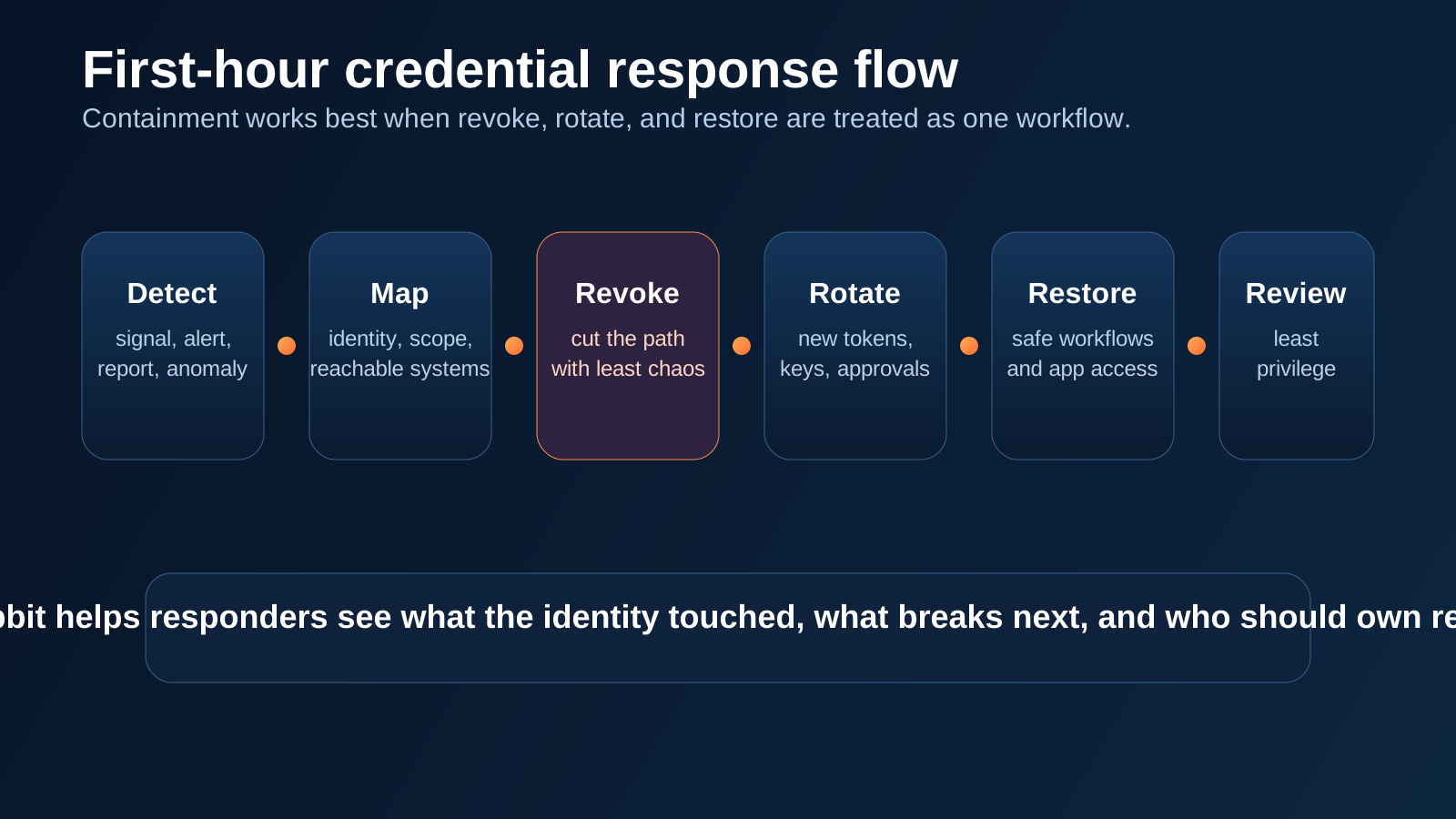
Good containment is not just about cutting access. It is about restoring the right access cleanly afterward.
Where OpsRabbit fits
OpsRabbit fits in the messy middle between suspicion and safe action.
The product story here is not "we revoke credentials for you."
The stronger story is that responders still need fast answers to the questions that shape containment:
- what identity is involved
- what changed recently
- what systems and workflows are in scope
- what breaks if this credential is revoked now
- which owner needs to approve the next step
That is time-to-context work.
When incidents span CI/CD, cloud, SaaS apps, and AI-connected tools, faster context assembly is often more valuable than one more isolated console.
Final thought
If your team still treats credential revocation as a late-stage cleanup step, the operating model is behind the threat model.
Revocation is increasingly a first-hour workflow.
The teams that handle it well will not just know how to click "revoke all." They will know:
- which identity path matters most
- what that identity could reach
- what breaks if it is cut
- how to rotate and restore with less privilege than before
That is a much better response posture than panic-rotating everything and hoping the incident ends before the outages begin.
FAQs
Why is credential revocation now an early response step?
Because modern credentials often bridge multiple systems at once, so containment frequently depends on cutting access before attackers can move further.
What is the main operational risk of bulk revocation?
Bulk revocation can stop pipelines, scripts, and app actions immediately, so teams need enough context to know what will break and how to restore safely.
Sources
- Self-service credential revocation for incident response - GitHub Blog, June 24, 2026.
- Revoking your credentials - GitHub Docs, accessed June 25, 2026.
- What's coming to our GitHub Actions 2026 security roadmap - GitHub Blog, March 26, 2026; updated March 30, 2026.
- Preinstall to persistence: Inside the Red Hat npm Miasma credential-stealing campaign - Microsoft Security Blog, June 2, 2026.
- Admin Controls, Security, and Compliance in apps (Enterprise, Edu, and Business) - OpenAI Help Center, updated June 2026.
- Authenticate to Google and Google Cloud MCP servers - Google Cloud Documentation, accessed June 25, 2026.
- AI security and safety - Google Cloud Documentation, accessed June 25, 2026.
Last Updated
2026-06-25
Ready to Transform Your Operations?
Ask for a demo today. Experience how OpsRabbit can reduce your MTTR by up to 90%.