Quick answer: AI is not just adding more automation to operations. It is making already noisy environments harder to interpret, which turns alert fatigue into an incident-response problem because responders lose time figuring out which signals matter and what action is safe.
TL;DR
- Alert fatigue is no longer only a monitoring problem. In AI-connected environments, it becomes an incident-response problem.
- The first slowdown is often not detection. It is building enough context to decide what the alert actually means.
- Traditional alert tuning still matters, but it does not solve the ambiguity introduced by layered AI workflows and faster change volume.
- OpsRabbit helps teams compress time-to-context so responders can move from noisy signals to safer next actions faster.
What problem are we solving?
Most operations teams already know what classic alert fatigue feels like.
Too many notifications. Too many things marked urgent. Too many interruptions that end in “this was not actually the problem.”
Google's SRE guidance has been blunt about the cost for years: if people get paged too often, they start skimming, second-guessing, and sometimes ignoring alerts altogether. That is not just annoying. It directly hurts response quality.
The newer version of the problem is more expensive.
As teams add AI-connected workflows into support tooling, developer operations, platform automation, and incident handling, alerts become harder to interpret quickly. A strange signal may come from a runbook automation, a summarization workflow, a retrieval layer, a connector, a policy change, or a downstream service. The responder still gets the alert, but now they need a lot more context before they know whether it deserves escalation.
That is why alert fatigue increasingly belongs inside incident-response thinking, not only monitoring hygiene.
Short answer
AI alert fatigue becomes an operations incident when responders can see that something looks wrong, but cannot quickly tell which workflow is involved, what changed, what is affected, and what the safest next step should be.
Why this matters now
Microsoft's recent guidance on incident response for AI makes a useful point: the fundamentals of response still hold, but AI changes the speed of harm, the telemetry teams need, and how remediation has to be verified.
That matters because faster notifications do not help much if teams still spend the first part of the incident stitching the story together.
Microsoft's separate framing of the agentic SOC pushes the same operational lesson from another angle. If evidence is pre-assembled and analysts can start with judgment-heavy work instead of alert sorting, response quality improves. If not, upstream speed still bottlenecks on human context assembly.
IBM and Ponemon's 2025 breach research reinforces why this is timely. Their findings highlight an AI oversight gap, with many organizations still lacking AI governance policies and proper access controls. When ownership, controls, and documentation lag behind adoption, already noisy environments become even harder to reason about during an incident.
What the first 20 minutes usually look like
A responder sees unusual behavior or a cluster of alerts. From there, the questions pile up fast:
- Is this a real incident or noisy automation?
- Which workflow, service, or connector is involved?
- Did a deploy, prompt, policy, or integration change recently?
- Is this a model issue, orchestration issue, retrieval issue, or downstream infrastructure issue?
- Who owns the affected path?
- What is the safest containment step?
That list is what makes this expensive.
In many environments, the symptom is visible quickly. What takes time is building enough trusted context to know what the symptom means.
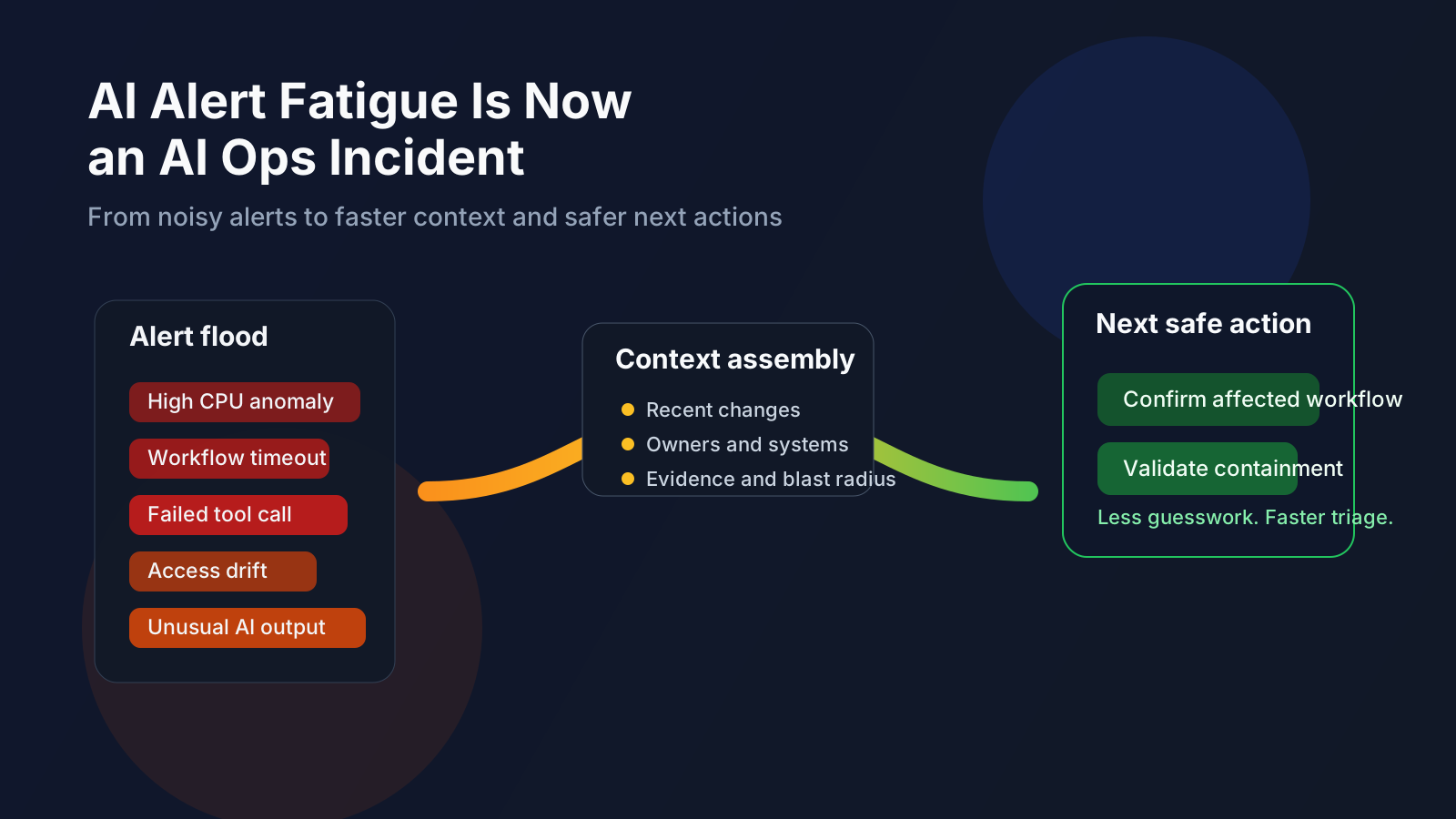
Too many alerts are bad. Too many ambiguous alerts are worse.
Why alert tuning is necessary but not enough
Teams should absolutely do the basics well.
They should reduce noisy pages, improve routing, tighten thresholds, and stop interrupting humans for low-confidence issues that do not require immediate action.
But good alert hygiene does not fully solve the newer problem.
Even a well-tuned alert can still be operationally expensive if the responder has to spend the next fifteen minutes discovering what changed, which systems are in scope, and which action is safe enough to try first.
That is why classic alert reduction and context assembly need to be treated as two related but separate disciplines.
Time-to-context is the hidden metric
Most teams already care about time-to-detect and time-to-resolve.
There is another metric sitting between them that deserves more attention: time-to-context.
Time-to-context is how long it takes to move from a suspicious signal to enough trusted evidence to take the next safe step.
That step might be suppressing a workflow, rolling back a deployment, isolating an integration, restricting access, or deciding the issue is noisy but not incident-grade.
Either way, the team needs a coherent picture before speed is useful.
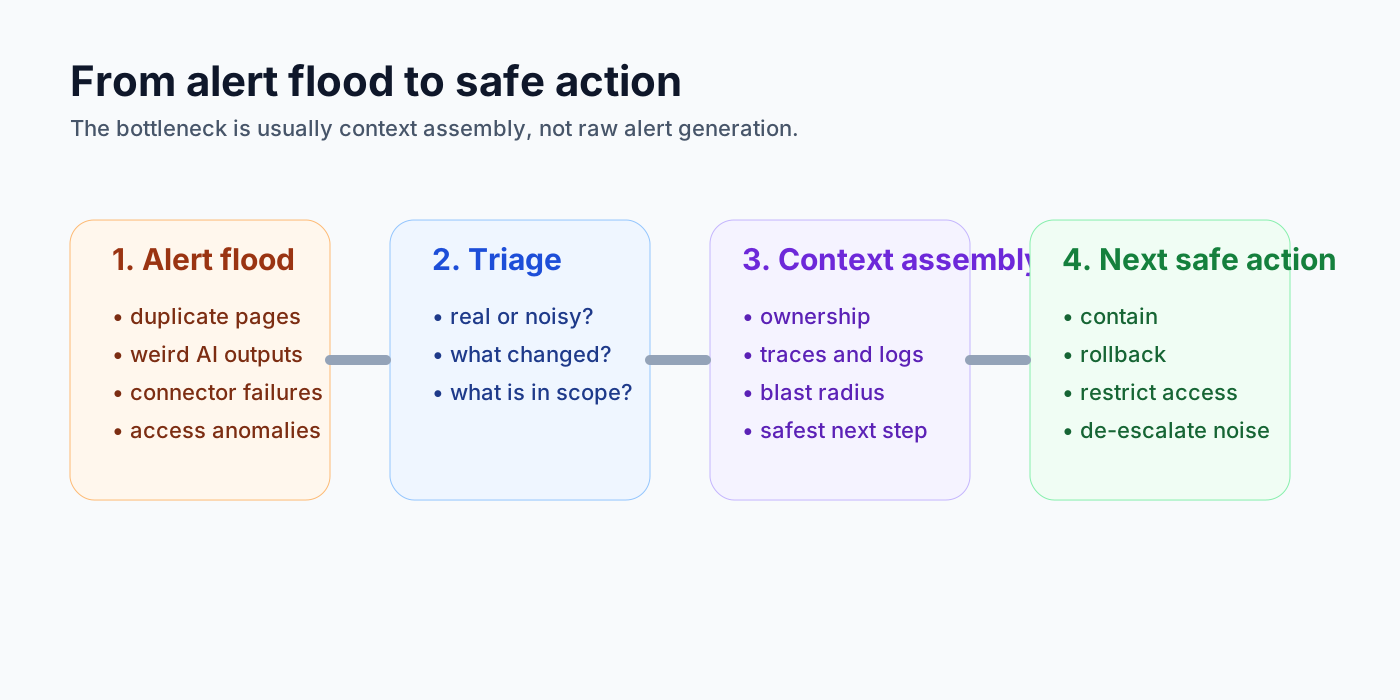
The operational win is not just faster alerts. It is faster understanding.
Where OpsRabbit fits
This is the gap OpsRabbit is designed to help close.
OpsRabbit helps teams build a usable incident picture faster:
- what changed
- what systems and workflows are in scope
- who owns them
- what evidence is most relevant
- what next action is safest to validate first
That is a more practical promise than “AI solves alert fatigue.”
The real benefit is not fewer dashboards by themselves. It is less time lost turning scattered signals into something responders can act on with confidence.
Final thought
AI is not ruining operations because it generates alerts.
It is straining operations because it increases the number of ambiguous signals teams have to interpret under pressure.
The teams that handle this well will still do the classic things right: better alerting, better ownership, better escalation, better monitoring discipline.
But they will also invest in faster time-to-context.
That means making it easier to answer the questions responders always ask first:
- what changed
- what is affected
- who owns it
- what evidence matters most
- what should happen next
That is the difference between being busy and actually being ready.
FAQs
Why is alert fatigue becoming an incident-response problem?
Because in AI-connected environments, responders often need much more context to decide whether an alert is real, what systems are involved, and what action is safe.
What should teams improve besides alert tuning?
They should improve time-to-context by making it easier to see recent changes, ownership, system scope, relevant evidence, and safe next actions in one place.
Sources
- Google SRE Book, Monitoring Distributed Systems - Google.
- Microsoft Security, Incident response for AI: Same fire, different fuel - Microsoft Security Blog.
- Microsoft Security, The agentic SOC—Rethinking SecOps for the next decade - Microsoft Security Blog.
- IBM, Cost of a data breach 2025 - IBM.
Last Updated
2026-04-29
Ready to Transform Your Operations?
Ask for a demo today. Experience how OpsRabbit can reduce your MTTR by up to 90%.