Quick answer: AI agents become an operations problem the moment responders cannot quickly answer which identities they run as, which MCP tools they can reach, what changed recently, and how far a bad action could spread.
TL;DR
- MCP and A2A adoption is creating a fast-moving permissions and visibility problem.
- Recent AWS and Microsoft guidance points to the same operational risk: agents and tools are being deployed faster than identity, auth, and audit controls can keep up.
- In the first hour of a suspicious event, the real bottleneck is usually context, not awareness.
- OpsRabbit helps teams build that context faster by connecting ownership, changes, telemetry, and likely blast radius.
What problem are we solving?
A lot of teams can now spin up AI agents, connect them to tools, and wire them into production workflows faster than they can govern them.
That sounds like a security architecture problem.
It is. But it is also an operations problem.
The issue shows up when something looks off and the response team starts asking painfully basic questions:
- Which agents are actually live right now?
- What identities do they run as?
- Which MCP servers or A2A peers can they reach?
- Did a new tool, skill, or permission get added this week?
- Which services or data paths sit behind those connections?
- Who owns the affected workflow and what should happen first?
If those answers are scattered across IAM, registries, CI pipelines, dashboards, and chat threads, the incident room slows down immediately.
Short answer
AI agent permissions sprawl turns into an ops incident when teams lack one usable view of identities, tools, recent changes, and affected services. The first challenge is not theoretical governance. It is building enough context to contain risk without guessing.
Why this matters right now
The timing is not accidental.
AWS and Cisco wrote on May 13, 2026 that enterprises now manage dozens to hundreds of MCP servers and that this growth creates visibility gaps, manual review bottlenecks, and missing audit trails for autonomous agents. That is already a practical operating problem, not a future one.
Microsoft published related guidance one day later with a different angle but the same conclusion. Their security team described exploitable AI application misconfigurations as low-effort paths to high-impact outcomes such as remote code execution, credential theft, and access to sensitive internal tools and data. They also noted that more than half of cloud-native workload exploitations, including AI applications, stem from misconfigurations.
Those two signals fit together cleanly:
- More agents and tool connections are showing up quickly.
- Identity, auth, and configuration controls often lag behind.
- Once something suspicious happens, operators need to scope blast radius fast.
That is exactly where a lot of teams are still weak.
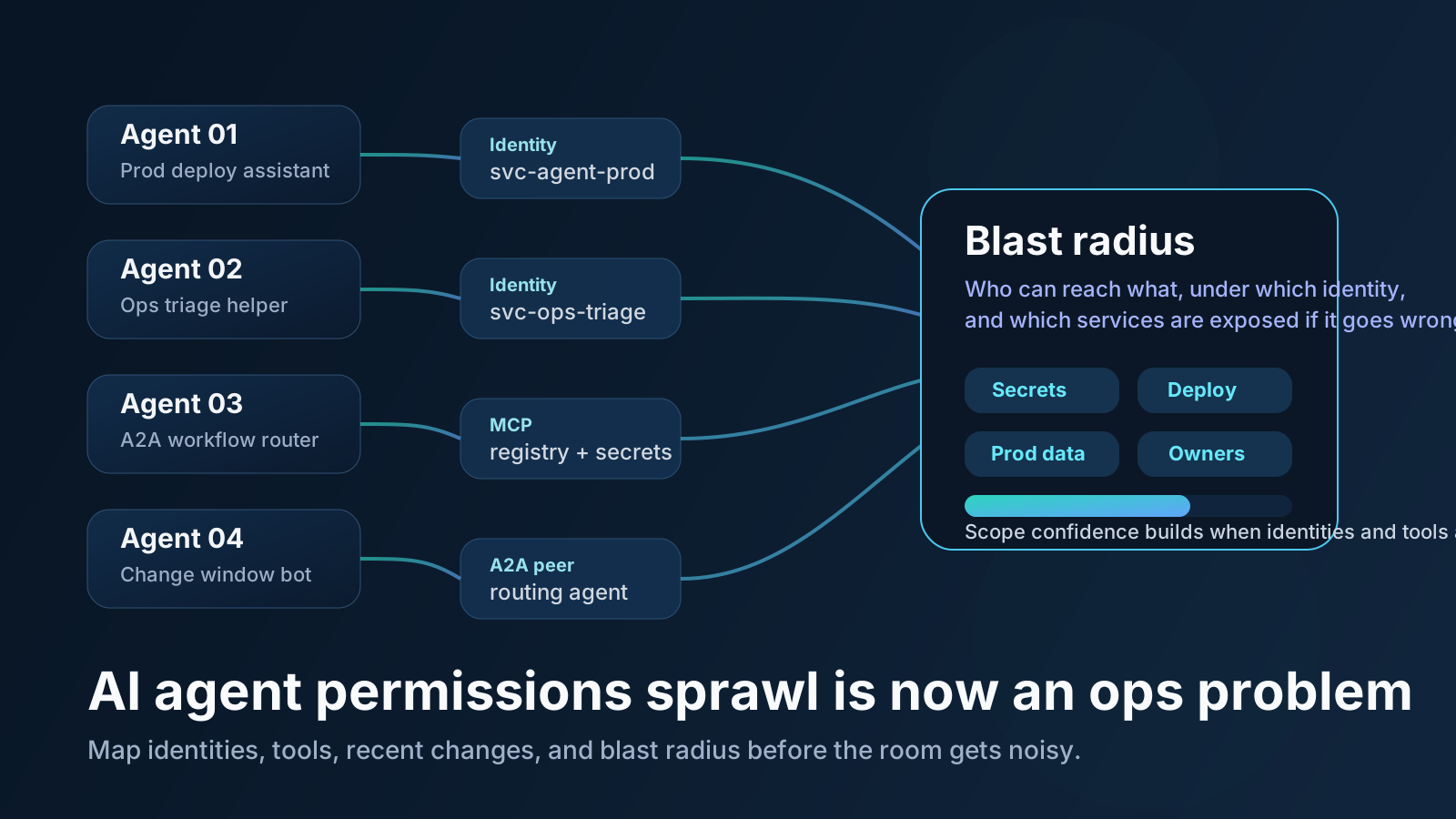
The real problem is rarely hearing the headline. It is figuring out which identities, tools, and services are in scope before the situation gets noisy.
The security story is really an operations story
The cleanest line from Microsoft's May 7 guidance is that AI models are not security boundaries.
That matters because a lot of incident confusion starts when teams treat the model as the thing to inspect first, while the real blast radius lives in the surrounding architecture:
- service identities
- tool permissions
- agent-to-agent trust
- exposed endpoints
- recent configuration changes
- host-level execution
If an agent can choose a tool, pass attacker-influenced parameters, or act under a broad service identity, the investigation has to move beyond prompts and outputs very quickly.
This is where the work turns operational.
Responders have to correlate AI-layer clues with ordinary infrastructure evidence:
- process activity
- cloud auth events
- tool invocations
- service ownership
- deploy history
- config drift
- downstream symptoms
Without that cross-layer view, teams either overreact or lose time.
What responders should do in the first hour
When you suspect an AI agent or tool-connected workflow is part of the incident, the first hour should answer a short list of practical questions.
1. Build an inventory of what is live
Do not rely on a mental model or a stale architecture doc. Identify the agents, skills, MCP servers, and A2A connections that are active in the relevant environment right now.
2. Map each workflow to an identity
Figure out what credentials or service principals each agent runs under. Microsoft recommends operating in the context of an authenticated user or agent rather than broad service-level identities, which is another way of saying you need a scannable identity map before something goes wrong.
3. Check blast radius, not just exposure
An exposed tool endpoint matters, but what matters more is what that endpoint can read, write, trigger, or delegate. Focus on practical reach:
- secrets and credentials
- production data stores
- deployment systems
- ticketing and chat systems
- cluster or cloud control planes
4. Correlate recent changes
Ask what changed in the last few days:
- new skills
- updated prompts
- added MCP servers
- broader permissions
- changed trust policies
- new agent-to-agent peers
This is often the difference between a theoretical weakness and a scoping answer.
5. Create one shared incident narrative
Microsoft's AI incident response guidance makes a useful point: context about who is affected and how they are affected matters more than simple severity labels in many AI incidents. Your responders need one working narrative that says what is in scope, what evidence exists, what is still uncertain, and what next action is safest.
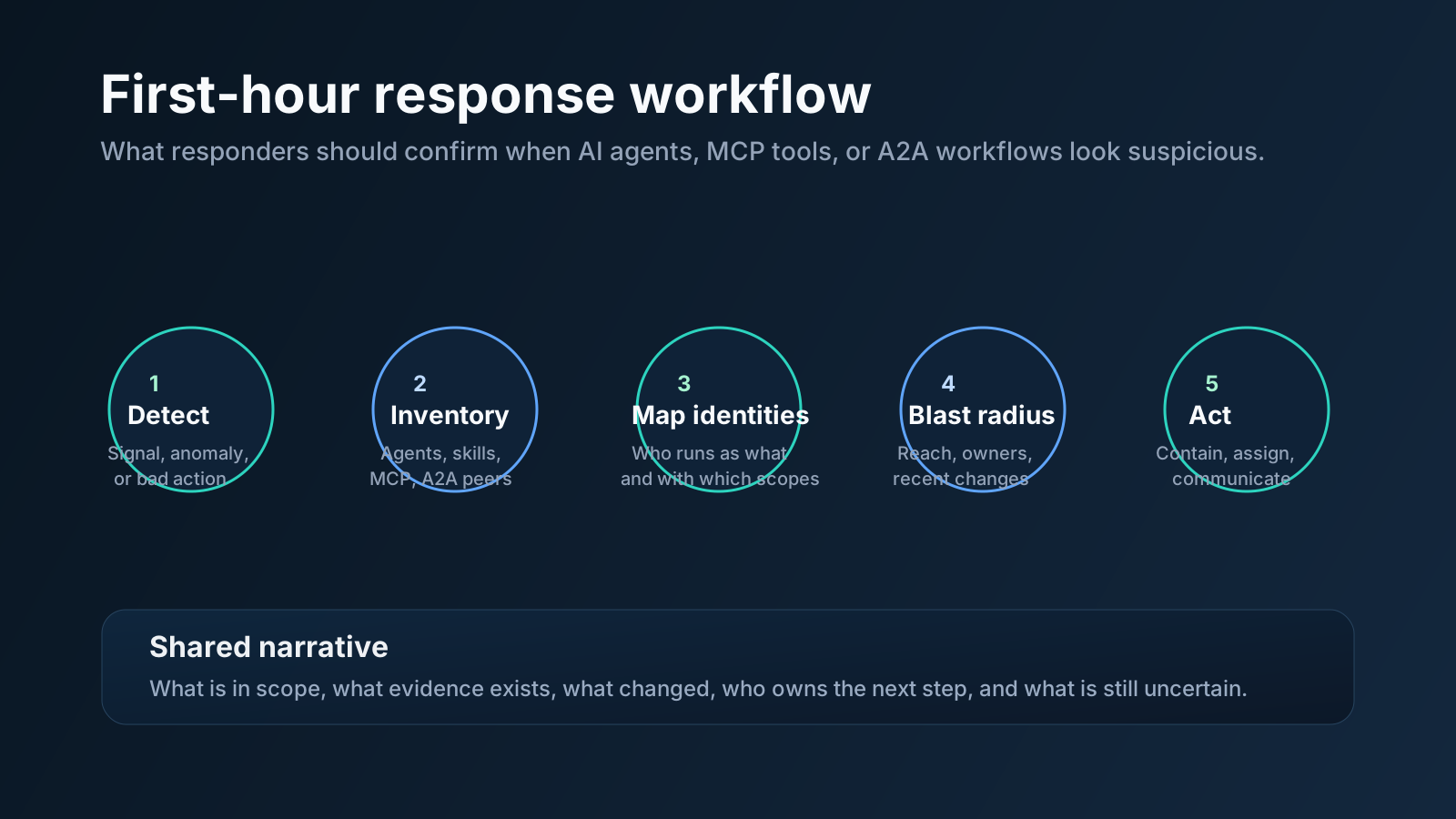
The first hour should focus on inventory, identity mapping, blast radius, and a shared response narrative.
What good controls look like in practice
The strongest public guidance right now is surprisingly boring, which is a good sign.
AWS highlights centralized visibility, automated scanning, and workflow integration. NIST's May 2026 material says not to give agents broad privileges or open-ended tools, to monitor for drift and unexpected tool use, and to log everything with provenance to support quick incident response.
None of that is flashy.
But it is exactly what operators need:
- a current inventory
- scoped identities
- clear ownership
- meaningful logs
- change awareness
- fast correlation across layers
The gap is that many teams have pieces of this, but not one usable incident view.
Where OpsRabbit fits
OpsRabbit is built for the moment after detection, when the room is full of questions and the answers are spread across too many systems.
For agent-related incidents, that means helping teams get to a usable response picture faster:
- what changed
- which workflows and services are in scope
- which owners need to respond
- what telemetry lines up with the suspicion
- which next actions are worth validating first
That is not a replacement for least privilege, registries, or scanning.
It is the layer that helps responders turn those signals into action when time matters.
Final thought
I do not think permissions sprawl is best understood as an AI governance talking point.
It is an incident response readiness issue.
If your team cannot quickly explain which agents exist, what they can touch, and what changed before something unusual happened, then the real exposure is not only the permission itself. It is the time you lose assembling context.
That is the gap worth fixing now, before the next suspicious tool action becomes a much bigger incident.
FAQs
Why is AI agent permissions sprawl an ops issue?
Because once something suspicious happens, responders need fast answers about identities, tool reach, owners, and recent changes before they can safely contain or remediate the issue.
What should teams do first?
Inventory live agents and tools, map them to identities, scope blast radius, correlate recent changes, and build one shared incident narrative with evidence and owners.
Sources
- AWS and Cisco, Securing AI agents: How AWS and Cisco AI Defense scale MCP and A2A deployments - published May 13, 2026.
- Microsoft Security, When configuration becomes a vulnerability: Exploitable misconfigurations in AI apps - published May 14, 2026.
- Microsoft Security, When prompts become shells: RCE vulnerabilities in AI agent frameworks - published May 7, 2026.
- Microsoft Security, Incident response for AI: Same fire, different fuel - published April 15, 2026.
- NIST, Agentic AI: Emerging threats, mitigations, and challenges - accessed May 31, 2026.
Last Updated
2026-05-31
Ready to Transform Your Operations?
Ask for a demo today. Experience how OpsRabbit can reduce your MTTR by up to 90%.