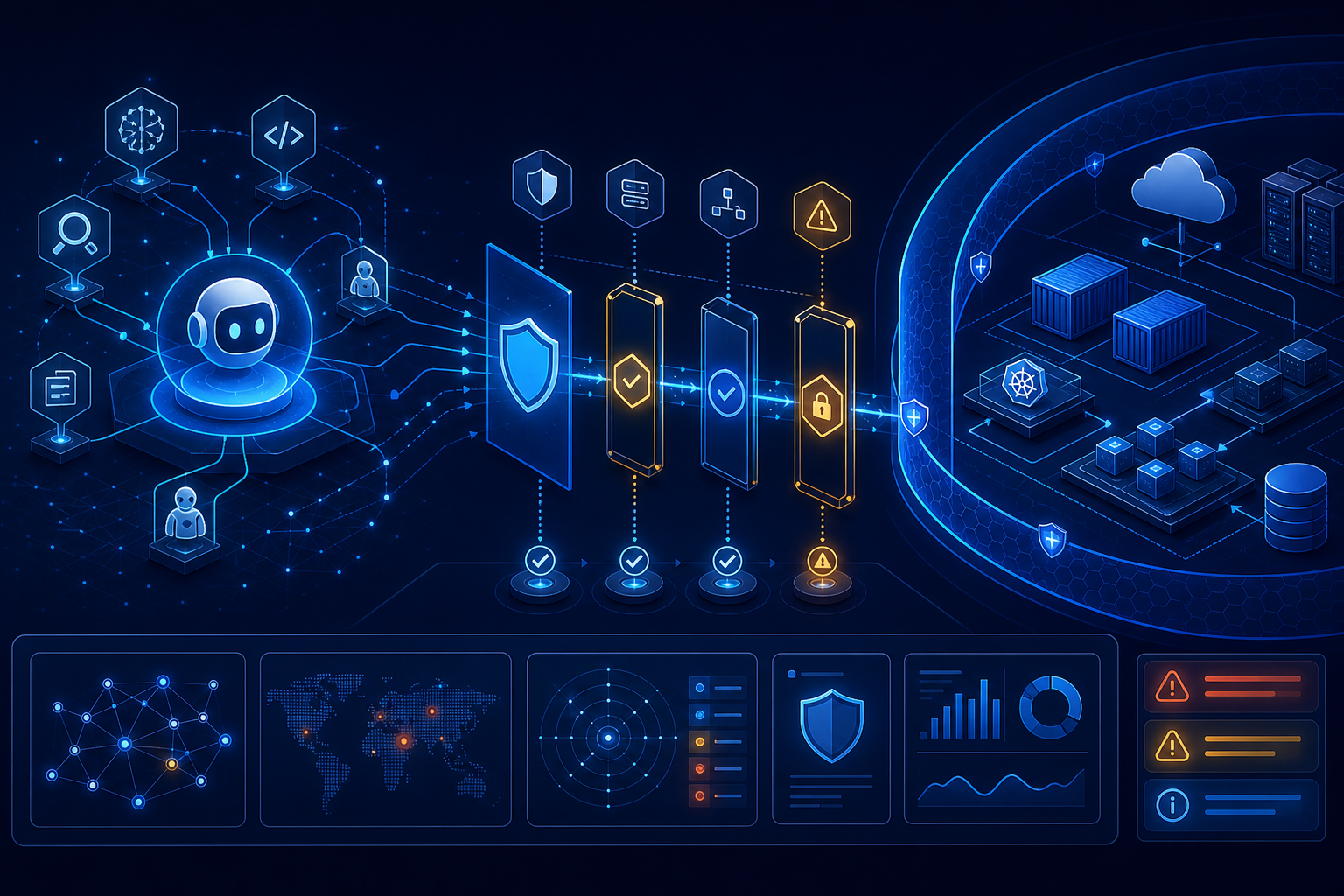
Quick answer: Agentic AI adoption gets dangerous when teams treat it as a policy problem instead of an operations problem. If ownership, permissions, telemetry, and response context are unclear, the first real failure will turn into a messy incident.
TL;DR
- New guidance from CISA and partners shows agentic AI adoption is now a live security and operations concern.
- AI-related incidents get more expensive when governance and access controls lag behind adoption.
- The practical guardrails are not just approvals and policies. They are ownership, bounded permissions, observable actions, and faster time-to-context.
- OpsRabbit fits in the response layer, where teams need trusted context before they can act safely.
What problem are we solving?
A lot of organizations are moving from passive AI assistants toward agentic systems that can query tools, trigger workflows, and influence production decisions.
That shift is useful. It can remove repetitive work, accelerate investigations, and help teams move faster.
It also changes the incident surface.
When an AI workflow can access internal systems, pull context from multiple tools, or trigger downstream actions, the failure mode is no longer just “the answer was wrong.” Now the question becomes more operational:
- Who owns this workflow?
- What systems can it touch?
- What changed before it behaved unexpectedly?
- What evidence do responders have when they need to contain it?
- How quickly can the team decide the next safe action?
Those are operations questions, not just governance questions.
Short answer
Agentic AI needs operational guardrails because the real risk shows up during execution and response. Policies may define what should happen, but incidents are resolved by teams who can see what happened, understand what changed, and act with confidence.
Why this matters right now
This is not theoretical anymore.
On May 1, 2026, CISA published guidance on the careful adoption of agentic AI services with international and U.S. partners. That matters because it signals that agentic systems have become important enough to deserve dedicated rollout guidance, not just generic AI advice.
The business case for taking this seriously is also pretty plain. IBM's Cost of a Data Breach 2025 report says the global average breach cost was $4.4 million, and it specifically highlights how AI governance gaps and weak access controls make AI-related incidents more likely and more expensive.
At the same time, Google Threat Intelligence Group reported that threat actors are increasingly using AI to accelerate reconnaissance, phishing preparation, malware work, and model extraction attempts. In other words, defenders are being asked to adopt AI while attackers are getting faster with it too.
That combination is exactly why operational readiness matters. If AI-enabled systems fail or get abused, teams need more than a policy PDF.
What changes when AI becomes agentic
The moment AI moves from suggestion to action, four things get harder.
1. Ownership gets blurry
A normal SaaS tool usually has a clear admin, a known change process, and a stable boundary.
Agentic systems are often assembled from prompts, connectors, APIs, internal scripts, and model-driven behavior. That means accountability can spread across platform teams, security teams, application owners, and whoever launched the pilot in the first place.
When something breaks, responders do not want to discover that nobody really owns the workflow end to end.
2. Permissions become part of the incident
The scary part of an agent is not that it uses AI. The scary part is that it may have real access.
If a workflow can read internal data, call ticketing systems, touch cloud resources, or invoke automation, responders need immediate clarity on what it was allowed to do and what it actually did.
This is where broad permissions and fuzzy integration sprawl get expensive.
3. Telemetry gets fragmented
AI workflows tend to create evidence across many layers:
- prompt or instruction history
- tool calls
- API logs
- cloud activity
- downstream system changes
- chat or ticket artifacts
That is a lot of context to stitch together during a live issue. If teams cannot correlate those signals quickly, mean time to resolution stretches fast.
4. Response gets slower when context is missing
This is the part many teams underestimate.
Even if a monitoring stack catches a problem, responders still need to know what changed, who owns the workflow, which systems were touched, and whether the incident is isolated or spreading.
That is the gap between detection and action. It is a time-to-context problem.
The four operational guardrails teams actually need
If you want agentic AI adoption to survive contact with production, these are the guardrails that matter most.
1. Clear ownership and escalation paths
Every agentic workflow needs a real owner, not just a sponsoring team.
That owner should be able to answer:
- what the workflow is allowed to do
- what systems it depends on
- who gets paged when it misbehaves
- what rollback or containment path exists
If those answers live in five different places, the guardrail is not strong enough.
2. Bounded permissions and scoped actions
Least privilege matters more when a model can trigger tools.
Teams should constrain:
- what data an agent can read
- what systems it can modify
- what actions require confirmation or human approval
- how credentials are rotated and monitored
This is not glamorous, but it is the difference between an annoying bug and a high-severity incident.
3. Observable workflows and evidence trails
You need an evidence trail that is usable during triage.
That means responders should be able to see:
- which workflow ran
- which tools were called
- what changed in the surrounding environment
- what outputs or downstream actions followed
- whether similar issues happened before
Without that, incident review turns into archaeology.
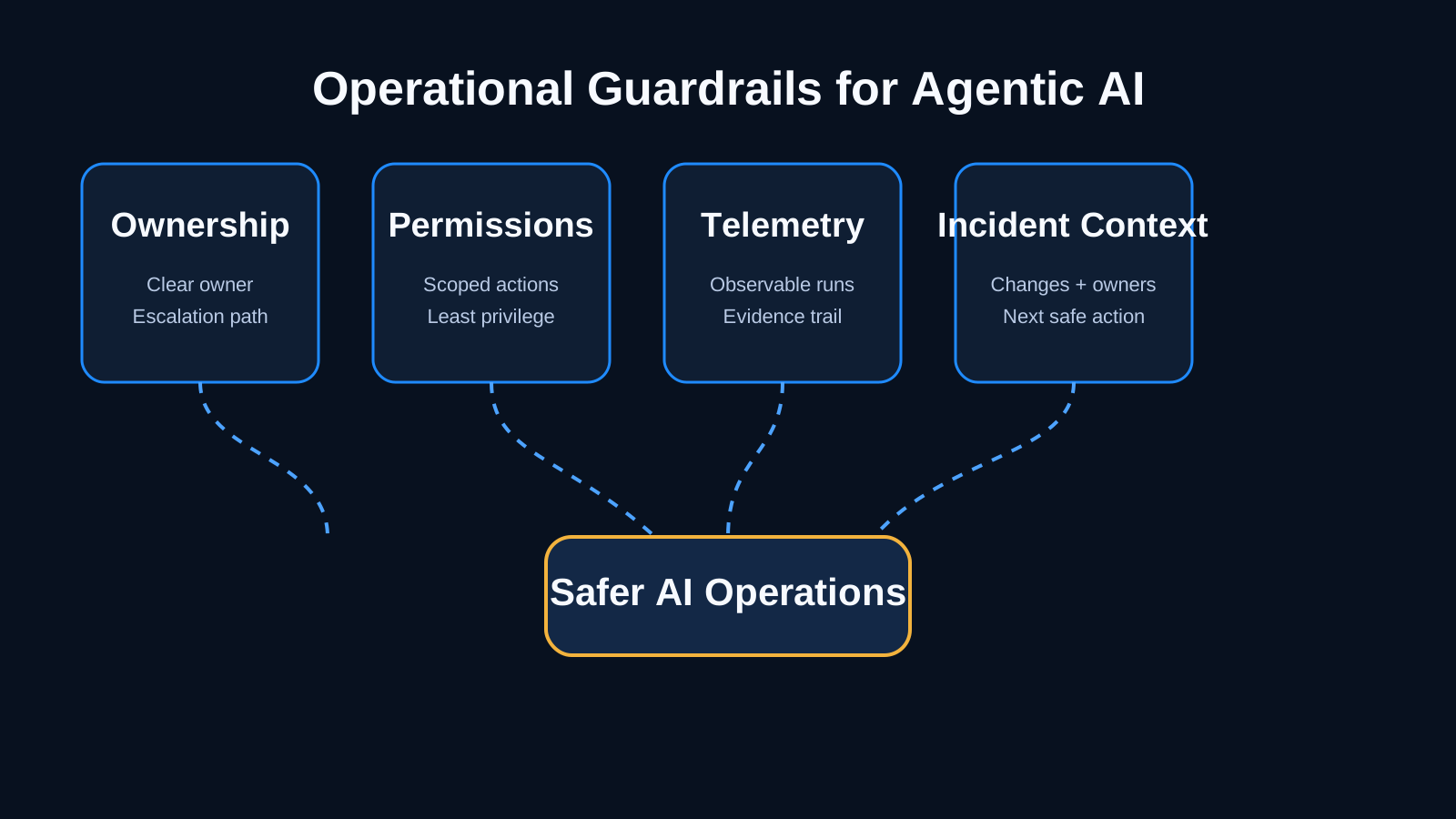
The practical guardrails that keep AI adoption from turning into response chaos.
4. Fast incident context assembly
This is the operational guardrail people skip until the first failure.
A strong team can move from signal to context quickly:
- recent changes
- affected services
- ownership
- telemetry
- related incidents
- likely next safe actions
That is where tools like OpsRabbit matter. Not because they replace governance, but because they help responders build the shared picture needed to act.
Where OpsRabbit fits
OpsRabbit is not the policy layer for agentic AI adoption.
It sits in the messy middle where teams are trying to understand what happened and what to do next.
When an AI-enabled workflow creates a security signal or operational incident, responders usually need the same set of answers fast:
- what changed
- what systems are affected
- who owns them
- what evidence supports containment, rollback, or escalation
OpsRabbit helps assemble that context across alerts, changes, and operational evidence so teams can reduce investigation drag. In practice, that means less time hopping between tools and less ambiguity in the first minutes that matter most.
The practical takeaway
The big mistake is assuming that AI adoption risk ends with model policy, vendor review, or prompt hygiene.
It does not.
The real test comes when an AI-connected workflow behaves badly in production, touches the wrong system, surfaces the wrong data, or creates a downstream security event. At that point, the winning team is not the one with the best slide deck. It is the one that can establish context fastest and take the next safe action.
That is why agentic AI adoption needs operational guardrails before it becomes an ops incident.
FAQs
What are operational guardrails for agentic AI?
They are practical controls around ownership, permissions, telemetry, and response workflows that make AI systems safer to run and easier to investigate.
Why is governance alone not enough for agentic AI?
Because policies do not tell responders what changed, who owns a failing workflow, or what evidence supports the next safe action during an incident.
Sources
- Careful Adoption of Agentic AI Services - CISA, May 1, 2026.
- Cost of a Data Breach Report 2025 - IBM, 2025.
- GTIG AI Threat Tracker: Distillation, Experimentation, and (Continued) Integration of AI for Adversarial Use - Google Cloud, February 13, 2026.
- The agentic SOC—Rethinking SecOps for the next decade - Microsoft Security Blog, April 9, 2026.
Last Updated
2026-05-05
Ready to Transform Your Operations?
Ask for a demo today. Experience how OpsRabbit can reduce your MTTR by up to 90%.